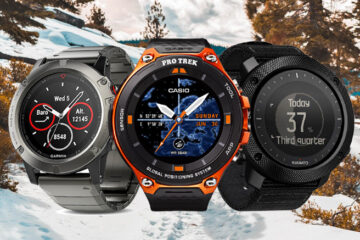
A traditional wristwatch and a smartwatch both tell time, but they are designed for different priorities. A conventional watch focuses on timekeeping, design, and straightforward ownership. A smartwatch adds phone notifications, apps, fitness tools, GPS, and other connected features, usually with more frequent charging and software requirements.
Neither is automatically better. The right choice depends on your phone, daily routine, preferred style, battery expectations, interest in health and fitness data, and willingness to manage another connected device. This guide compares the practical differences for buyers in the United States and explains when a traditional watch, smartwatch, or hybrid watch makes more sense.
Written by Abdul Khader, researcher and writer at Top Reviewd. Last updated: November 5, 2026
Quick Answer: Wristwatch vs Smartwatch
Choose a traditional wristwatch if you mainly want a reliable time display, a personal style accessory, long intervals between battery changes or winding, and no need for phone apps. Choose a smartwatch if you want notifications, calls, mobile payments, GPS, workout tracking, sleep summaries, or apps on your wrist and are comfortable with charging, setup, and data settings.
| Factor | Traditional Wristwatch | Smartwatch |
|---|---|---|
| Main purpose | Timekeeping, design, and selected watch functions | Timekeeping plus connected apps, notifications, and digital tools |
| Phone connection | Not required for basic timekeeping | Usually paired to a compatible phone for setup and full features; some cellular models can work more independently |
| Battery or power | Quartz uses a replaceable battery, mechanical uses a wound mainspring, and solar uses light to recharge a cell | Rechargeable battery; runtime varies widely by model, screen, GPS, cellular use, and settings |
| Notifications and calls | Generally not available, except on connected hybrid models | Available on supported models and apps, with cellular capability on selected versions |
| Health and fitness | Usually limited to time and timing functions | May offer heart-rate estimates, activity and sleep tracking, GPS, and other sensors |
| Style and display | Analog or digital dial, hands, and physical materials | Digital screen, configurable faces, and interchangeable bands on many models |
| Maintenance | Battery, strap, seal, or mechanical servicing depending on movement | Regular charging, software updates, app support, and eventual battery aging |
| Best for | Simple timekeeping, classic style, and fewer digital interruptions | Connected convenience, training data, and phone-linked functions |
For a simple timekeeper without notifications, a traditional quartz or solar watch is often the more straightforward choice. For someone who wants a wrist-based extension of a smartphone, a smartwatch offers more tools. For a broader overview of conventional watch styles, see Different Types of Watches.
What Is a Traditional Wristwatch?
A traditional wristwatch is a timepiece worn on the wrist that does not depend on a smartphone app ecosystem for its basic timekeeping. It may use hands and an analog dial or a digital display. Some watches also include a date, alarm, stopwatch, chronograph, rotating bezel, or second time zone.
Common Types of Traditional Watches
Quartz Watches
A quartz watch uses an electronic oscillator regulated by a quartz crystal and is usually powered by a replaceable battery. It is a practical option for people who want a simple, generally accurate time display without daily charging. Battery life depends on the movement, display, and features. Read Mechanical vs Quartz Watch for a closer explanation of the movement difference.
Mechanical and Automatic Watches
A mechanical watch stores energy in a wound mainspring. A hand-wound model needs to be wound by its wearer, while an automatic watch uses a rotor that winds the mainspring as the watch moves on the wrist. These watches do not need an electronic battery to run the movement, but they have a finite power reserve and need periodic mechanical servicing.
Solar Watches
A solar watch converts light into electrical energy and stores it in a rechargeable cell. It can reduce the need for routine battery replacement, but it still needs suitable light exposure and eventual maintenance. Read Solar vs Automatic Watch for the practical differences.
Traditional watches can be inexpensive or highly collectible. The category includes basic digital watches, dress watches, field watches, divers, chronographs, and luxury mechanical models. Their price and durability depend on materials, movement, construction, brand, and service requirements, not simply on whether they are smart or traditional.
What Is a Smartwatch?
A smartwatch is a wrist-worn connected device with a small operating system, display, sensors, and software features. Depending on the model, it can show phone notifications, answer calls, send messages, run apps, make contactless payments, play music, record GPS routes, and track activity or sleep.
Smartwatch capabilities vary considerably. Some models focus on communication and apps, others on sports and outdoor navigation, and some mainly track fitness. A feature listed in one model should not be assumed to exist in every smartwatch. Explore our guide to Smartwatch Features and Benefits for more examples.
Common Types of Smartwatches
- General-Purpose Smartwatches: Focus on notifications, apps, calls, payments, basic health information, and phone integration.
- Fitness and Sports Watches: Emphasize workout tracking, GPS, training metrics, navigation, and longer battery life on many models.
- Cellular Smartwatches: Selected models can make calls or use data without the phone nearby when activated with a supported carrier plan.
- Hybrid Smartwatches: Combine a conventional-looking dial or hands with selected connected functions, often with fewer apps and a simpler display.
Traditional Watch vs Smartwatch: Key Differences
1. Timekeeping and Everyday Convenience
A traditional watch is designed to make the time easy to read, often with a glance at the dial. It does not need to connect to a phone to perform that basic job. A smartwatch can also display the time, but it may require setup, software, and regular charging. Some smartwatches offer an always-on display, while others wake the screen when you raise your wrist or tap it.
If you mainly want to know the time without checking a phone, a traditional watch may be simpler. If you want to see calendar alerts, messages, timers, or navigation prompts without taking out your phone, a smartwatch can be more convenient. Our article on the Benefits of Wearing a Wristwatch discusses why people still choose a dedicated timepiece.
2. Phone Compatibility and Standalone Use
Phone compatibility is one of the most important checks before buying a smartwatch. Apple states that Apple Watch is compatible with iPhone, while newer Samsung Galaxy Watch models have Android requirements and are not compatible with iOS. Google Pixel Watch also requires a compatible Android phone for setup. Requirements differ by generation, region, and software version, so check the exact model before purchasing.
Official compatibility information is available from Apple Watch and iPhone Compatibility, Samsung Galaxy Watch and Phone Compatibility, and Google Pixel Watch Setup Requirements.
Bluetooth-only smartwatches generally depend on the paired phone for some connected features. A cellular version may make calls or access data independently for certain tasks, but it usually needs carrier support, an eligible plan, and compatible service. A conventional quartz, mechanical, or solar watch does not need this phone pairing for timekeeping.
3. Battery Life and Charging
There is no single battery-life figure for all smartwatches. A screen that stays on, frequent GPS workouts, cellular calls, music streaming, and continuous sensor use can shorten runtime. A simpler sports watch may run for many days or longer, depending on its design and settings. Always compare the manufacturer’s estimate for the exact model and mode you intend to use.
For context, Apple lists up to 24 hours of all-day battery life for Apple Watch Series 12 under its stated test conditions, while Garmin’s published table shows that some of its sports watches are rated for multiple days or weeks in smartwatch mode. These are manufacturer estimates, not guaranteed results for every user. See Apple Watch Battery Information and Garmin Smartwatch Battery-Life Guidance.
Traditional watches have different power systems. Quartz models use replaceable batteries, mechanical watches use a mainspring, and solar models recharge through light. A mechanical watch does not need an electronic battery, but it does need winding or regular wear depending on its movement and will require maintenance. A solar watch still needs enough light and eventual service of its rechargeable cell.
4. Health and Fitness Tracking
A smartwatch may track steps, heart rate, workout duration, sleep patterns, blood oxygen estimates, GPS routes, or other metrics. Which measurements are available depends on the model, region, software, and the manufacturer’s intended use. A traditional wristwatch usually focuses on timekeeping, although selected sports watches include a stopwatch, lap timer, compass, or other activity tools.
Smartwatch sensors can be useful for understanding personal activity trends, but consumer wellness features should not automatically be treated as medical tests. The FDA’s January 2026 General Wellness Policy for Low Risk Devices distinguishes general wellness functions from products intended to diagnose, treat, or manage a disease. Do not use a consumer watch as a substitute for a clinician’s evaluation or a medical device when medical decisions are involved.
For sport-focused use, compare the specific GPS, training, and recovery tools rather than buying a smartwatch based only on its number of sensors. See our guide to the Best Smartwatch for Activity Tracking and Smartwatches for Hiking.
5. Notifications, Calls, Payments, and Apps
Smartwatches can surface messages, calls, reminders, music controls, directions, and supported payment functions. These features can reduce how often you need to take out your phone, but they can also create more interruptions. Whether calls work without the phone nearby depends on the watch version, Bluetooth connection, cellular hardware, carrier, and plan.
A traditional watch generally has fewer digital interruptions and does not depend on app availability. Some digital watches include alarms and stopwatches, but they are not necessarily smartwatches. A hybrid watch may deliver selected notifications while keeping a more conventional appearance.
6. Privacy and Personal Data
A smartwatch can collect information such as activity, location, sleep, heart-rate readings, contacts, notifications, or app usage, depending on the model and permissions. That data may be processed by the device maker, companion app, cloud services, or connected third parties. A conventional watch without connected electronics generally collects much less personal digital information.
Before enabling health or location features, review app permissions, account security, data sharing, retention controls, and whether information is shared with other services. Turn off features you do not need and use a strong account password or passkey where supported. Convenience is useful, but you should understand what information your wearable stores and syncs.
7. Durability, Water Resistance, and Repairs
Neither traditional watches nor smartwatches are automatically tougher or more water resistant than the other category. Durability depends on case material, crystal, screen protection, construction, strap, seals, and the rating given to the exact model. A rugged GPS watch may be designed for demanding outdoor use, while a dress smartwatch may prioritize a slim display and finish. A well-built traditional sports watch may also be suitable for activities where a delicate smartwatch is not.
Check the manufacturer’s water-resistance instructions before swimming, showering, or diving. Water resistance can be affected by age, impacts, worn seals, heat, soap, and repairs. Do not assume that a smartwatch is waterproof or that a traditional watch cannot be used around water. Follow the rating and operating instructions for the particular watch.
Traditional watches can often be serviced by a qualified watchmaker, although parts availability and repair cost vary. Smartwatches may need manufacturer or specialist service for a damaged screen, battery, sensor, or internal electronics. Software support also matters because a device can remain physically intact while some apps or functions become unavailable over time.
8. Price and Total Cost of Ownership
It is not accurate to say that every smartwatch costs more than every traditional watch. Both categories include inexpensive and premium options. Luxury mechanical watches can cost far more than many smartwatches, while entry-level smartwatches can cost less than some well-made conventional watches.
Compare the total cost, not just the price on the box. A smartwatch may involve a charging cable, cellular plan, replacement band, optional subscriptions, or eventual repair. A traditional watch may need battery changes, strap replacement, pressure testing, or mechanical servicing. Choose the functions you will use and include realistic maintenance costs over the time you expect to own it.
9. Style, Comfort, and Customization
Traditional watches offer a wide variety of case shapes, dial layouts, materials, movements, and strap designs. Their appearance does not depend on a screen being on, and many can be worn for years with strap or bracelet changes. Smartwatches offer digital watch faces, notifications, widgets, and bands that can be changed to suit different activities or outfits.
Try to judge comfort on your own wrist. Case diameter, thickness, weight, lug length, band material, buckle, screen size, and sensor placement all affect fit. A feature-rich watch that feels bulky or irritates your wrist may not be the best everyday choice.
Pros and Cons of Traditional Watches and Smartwatches
Traditional Wristwatch: Advantages and Disadvantages
Advantages
- Basic timekeeping works without phone pairing or app setup.
- Quartz and solar options can go a long time between power interventions.
- Many designs suit formal, casual, and work settings.
- Fewer digital notifications and connected-data settings to manage.
- Mechanical watches offer traditional movement construction and a distinct ownership experience.
Disadvantages
- Most do not provide calls, messaging, navigation, or app notifications.
- They generally cannot record GPS workouts or provide smartwatch-style activity summaries.
- Mechanical movements need periodic service, and quartz watches need battery replacement.
- Specialized features such as compass, chronograph, or alarms are model-dependent.
Smartwatch: Advantages and Disadvantages
Advantages
- Convenient access to phone alerts, messages, and calls on supported devices.
- Apps, timers, music controls, navigation prompts, and mobile payments on selected models.
- Fitness, activity, sleep, and GPS tools depending on sensors and software.
- Configurable digital faces, widgets, and interchangeable bands.
- Some cellular and sports models can perform useful tasks away from a phone.
Disadvantages
- Needs regular charging, with runtime varying by model and use.
- Some features depend on a compatible smartphone, app, account, or cellular plan.
- Can create extra notifications and screen interruptions.
- Stores or syncs personal information that requires privacy and account settings.
- Long-term usefulness may depend on software updates, app support, and battery condition.
Which Should You Buy: A Traditional Watch or a Smartwatch?
Start with the job you want the watch to do. A traditional watch is a strong fit for simple timekeeping, classic design, and fewer connected distractions. A smartwatch is more useful when you want notifications, apps, fitness information, and phone-linked tools on your wrist. A hybrid model can offer a middle ground.
Choose a traditional watch if you mainly want an easy-to-read time display, do not need calls or app alerts, and prefer not to charge another electronic device regularly. Quartz and solar models are practical options for straightforward ownership, while mechanical watches may appeal to people who enjoy traditional movements and watchmaking.
Choose a smartwatch if connected features, phone compatibility, GPS, workout tracking, notifications, or mobile payments matter to you and you are comfortable with charging and data settings. Before buying, compare the exact model’s battery estimate, supported phone, water-resistance instructions, service options, and total cost. No category is best for everyone.
Choose a Traditional Watch If
- You mainly want a clear time display and do not need calls or notifications on your wrist.
- You prefer not to charge another electronic device frequently.
- You like analog design, mechanical movements, or a classic accessory.
- You want basic timekeeping without a phone, app, or account.
- You prefer fewer connected features and less personal data syncing.
Choose a Smartwatch If
- You want to see messages, alerts, or calls without reaching for your phone.
- You regularly track workouts, routes, or fitness trends.
- You want apps, navigation, music controls, or contactless payment on your wrist.
- You are comfortable charging the watch and checking phone compatibility.
- You are willing to review privacy settings and manage notifications.
Consider a Hybrid Watch If You Want Both
A hybrid watch is a middle ground for someone who likes the appearance and simple time display of a conventional watch but wants selected connected features. Depending on the model, it may offer discreet notifications, activity tracking, or basic smart functions without a large touchscreen and full app interface. Check exactly which features are supported because hybrid models differ considerably.
Smartwatch or Wristwatch Buying Checklist
- Compatibility: Does the watch work with your current phone and operating-system version?
- Battery or power: How often will you need to charge it, replace a battery, expose it to light, or wind it?
- Purpose: Do you need timekeeping, calls, notifications, navigation, sport tracking, or simply a design you like?
- Fit: Does the case and strap feel comfortable for a full day?
- Durability: Are the crystal, case, screen, and water-resistance rating suitable for your routine?
- Privacy: Are you comfortable with the data the companion app collects and shares?
- Ownership cost: Have you considered charging accessories, cellular plans, subscriptions, battery changes, and service?
- Support: Does the manufacturer still provide software updates, replacement parts, or service for the model?
Frequently Asked Questions: Wristwatch vs Smartwatch
1. What Is the Main Difference Between a Wristwatch and a Smartwatch?
A traditional wristwatch is primarily designed to tell time, while a smartwatch adds connected features such as notifications, apps, calls, GPS, and fitness tracking. A conventional watch usually works without phone pairing, while many smartwatch features depend on a compatible phone or service.
2. Which Is Better, a Traditional Watch or a Smartwatch?
Neither is universally better. A traditional watch is a better fit for straightforward timekeeping, style, and fewer digital interruptions. A smartwatch is a better fit for connected convenience, notifications, apps, and fitness features. Choose based on the functions you will actually use.
3. Do Smartwatches Last Longer Than Traditional Watches?
There is no simple rule. A traditional watch may remain serviceable for many years, depending on its movement, materials, maintenance, and parts availability. A smartwatch may become limited by battery aging, software support, app compatibility, or repair costs even if its case remains intact. Durability and useful lifespan depend on the specific product.
4. Which Has Better Battery Life?
Traditional watches usually require less frequent attention to power. Quartz watches need periodic battery replacement, solar watches recharge through light, and mechanical watches need winding or wrist movement. Smartwatch battery life varies from model to model and can be reduced by GPS, cellular use, screen settings, and frequent sensor activity.
5. Are Smartwatches More Waterproof Than Regular Watches?
Not automatically. Water resistance depends on the exact model, seals, construction, and manufacturer rating. Some traditional sports watches have strong water-resistance ratings, while some smartwatches are designed mainly for everyday use. Check the manufacturer’s instructions before exposing any watch to water.
6. Can a Smartwatch Work Without a Phone?
Some smartwatch functions may work without a nearby phone, including timekeeping, stored music, workout recording, and GPS on supported models. Calls, messages, apps, setup, and syncing may still require a paired phone, Wi-Fi, or a cellular plan. Check the exact model and carrier requirements.
7. Can an Apple Watch Work With an Android Phone?
Apple Watch requires a compatible iPhone for normal setup and use. It is not designed to pair with an Android phone as its companion device. Confirm current requirements on Apple’s official compatibility page before purchasing.
8. Do Smartwatches Need the Internet?
Not for every function. Basic timekeeping, timers, and some offline workout or music features can work without an internet connection. Weather updates, online apps, cloud syncing, streaming, and some messaging functions need a phone connection, Wi-Fi, or cellular data.
9. Are Smartwatch Health Readings Accurate?
Accuracy depends on the sensor, device, fit, activity, and measurement. A smartwatch may be useful for trends and general wellness information, but readings should not automatically be treated as a clinical measurement or diagnosis. Follow medical advice and use appropriate medical equipment when needed.
10. What Is a Hybrid Watch?
A hybrid watch combines a conventional watch appearance, sometimes with physical hands, with selected connected functions such as notifications or activity tracking. It usually offers fewer apps and less screen interaction than a full smartwatch.
11. Should I Wear a Smartwatch Every Day?
You can wear one daily if it is comfortable, suitable for your activities, and you are happy with its charging and data settings. Keep the band clean and dry the skin beneath it. Remove it where workplace or activity safety rules require, and do not wear it so tightly that it causes discomfort.
Related Watch Guides
- Topreviewd Watch Reviews and Guides
- Benefits of Wearing a Wristwatch
- Smartwatch Features and Benefits
- Best Smartwatch for Activity Tracking
- Smartwatches for Hiking
- Smartwatches for Calls and Texting
- Different Types of Watches
Editorial Note
This article compares broad categories of traditional watches and smartwatches. It is not a hands-on laboratory test of every model, and product features, compatibility, water resistance, battery runtime, and app support can vary by version, region, phone, and software. Manufacturer estimates are identified as estimates. Health and fitness features are discussed as general consumer functions, not as a substitute for medical care. Check the documentation for the exact model before buying or using it for a particular activity.
Trusted Sources
- Consumer Reports: How to Choose a Smartwatch or Fitness Tracker, updated September 10, 2026, for compatibility, battery life, fit, comfort, and activity-tracking considerations.
- Apple Support: Apple Watch and iPhone Compatibility, for current model and operating-system requirements.
- Samsung Support: Galaxy Watch and Phone Compatibility, for Android and iOS compatibility differences.
- Google Pixel Watch Help: Setup and Phone Requirements.
- Apple: Watch Battery Information, for model-specific runtime and test conditions.
- Garmin: Smartwatch Battery-Life Guidance, for the range of runtime estimates across sports-watch models and modes.
- US Food and Drug Administration: General Wellness Policy for Low Risk Devices, for the distinction between wellness features and medical-device functions.
How This Guide Is Researched and Kept Current
This guide was reviewed against current comparison coverage for traditional watches, smartwatches, and hybrid wearables. The comparison focuses on practical buyer questions such as phone compatibility, battery runtime, notifications, health and fitness functions, privacy, water resistance, repairability, and total cost of ownership. Manufacturer support pages are used for model-specific compatibility and battery examples, while Consumer Reports provides independent buying-guide context. FDA guidance is used to explain the limits of general wellness features. This article does not claim hands-on testing of every watch or smartwatch. We review the guide when major compatibility, software, or product changes make an update useful. Report corrections through the Topreviewd Contact Us Page.
About the Author
Abdul Khader is a watch enthusiast, researcher and writer, and the person behind Topreviewd. He writes about luxury and designer watches, automatic and quartz movements, materials, sizing, straps, crystals and water resistance, comparing watches across different price points so readers can judge what they get for the money. His approach is practical. He checks specifications, points out when sources disagree, and keeps published details separate from his own opinion. Read more on the About Page, or reach him through the Contact Us page.