An Apple Watch band can start to smell sour, musty, or sweaty even when you shower regularly. The usual reason is a combination of sweat, skin oils, dead skin, sunscreen, lotion, and moisture collecting where the band touches your wrist. The odor is often a sign that the band needs material-appropriate cleaning and enough time to dry, not proof that you are unhygienic.
The right fix depends on the band. A Sport Band, woven loop, FineWoven strap, leather band, and metal bracelet do not all tolerate the same cleaners or amount of water. This guide explains why an Apple Watch band smells, how to clean different materials safely, and how to prevent the odor from returning.
Written by Abdul Khader, researcher and writer at Top Reviewd. Last updated: November 4, 2026
Quick Answer: Your Apple Watch band most often smells because sweat, skin oils, soap, sunscreen, and other residue stay trapped against your wrist or in the band. Remove the band, clean it using the instructions for its exact material, and dry it completely before wearing it again. Do not use alcohol, detergent, or water on every band by default. If the smell remains after careful cleaning and full drying, inspect the connectors and material for residue or damage and consider replacing the band.
Key Takeaways
- Sweat, skin oils, moisture, sunscreen, and soap residue can build up under an Apple Watch band and contribute to odor.
- Cleaning instructions depend on the material. Leather and FineWoven need different care from Apple sport-style bands.
- Remove the band before cleaning it, and let it dry fully before reattaching it.
- Apple permits certain disinfecting wipes on specific band types, but not on fabric or leather bands.
- A bad smell alone does not prove that the band has harmful bacteria or that you have a skin infection.
- Clean more often after workouts or heavy sweating, and replace a band if odor persists alongside cracking, peeling, fraying, or other damage.
Why Does My Apple Watch Band Smell?
Your watch band sits against warm skin for hours. Sweat and natural skin oils can mix with dead skin cells, dust, sunscreen, moisturizer, soap, and other residue. When that material stays in small gaps, beneath the strap, or around a buckle, an unpleasant smell can develop. Moisture that does not dry completely can make the problem more noticeable.
1. Sweat and Moisture Stay Trapped Under the Band
Exercise, hot weather, and long periods of wear can leave sweat between the band and your wrist. A close fit helps the watch sensors maintain skin contact, but a band that is too tight can reduce airflow and make the area feel damp. After a workout, loosen or remove the watch when practical, clean your skin, and dry both your wrist and the band before wearing it again.
2. Skin Oils, Dead Skin, and Everyday Residue Build Up
Body oils, sunscreen, lotion, soap, and dirt can collect on the underside of the strap. The area around holes, seams, buckles, pins, and adjustment points can be easy to miss during a quick wipe. A thin layer of residue may remain even when the band looks clean from the outside.
3. The Band Has Not Dried Completely
A band that is put back on while damp can hold moisture against the skin. This is especially worth checking with thicker woven straps, braided materials, and bands with stitched or textured areas. Surface dryness does not always mean the inside of the material is dry, so allow extra time when the band has been washed or heavily exposed to sweat.
4. The Band Material or Design Does Not Suit Your Routine
Different materials behave differently. A smooth sport-style band is simple to wipe, but a close-fitting design may hold sweat against your wrist. Woven fabric can feel more breathable, yet it may absorb moisture and take longer to dry. Leather and FineWoven need more careful moisture control, while metal links can collect residue in narrow spaces. No material is guaranteed to stay odor-free in every climate or activity.
5. Residue Is Trapped Around the Buckle or Band Connectors
Odor may come from the buckle, the inside of a clasp, or the area where the band slides into the watch case. Remove the band and inspect these areas in good light. Clean the band separately and clean the watch itself only according to Apple’s instructions. Do not push sharp objects into the watch openings or use liquid directly on the watch connectors.
6. The Band Is Worn, Damaged, or Retaining Odor
Repeated use, sun exposure, friction, and unsuitable cleaners can change a band’s surface. Cracks, peeling, fraying, sticky patches, discoloration, or a smell that returns quickly after careful cleaning may indicate that the material is breaking down or retaining residue. At that point, another cleaning cycle may not solve the problem.
Does the Apple Watch Band Material Affect Odor?
Yes, the material affects how a band handles moisture and cleaning, but there is no universal rule that one material always smells more than another. Your activity, fit, climate, cleaning routine, and the band’s condition also matter.
| Band material or style | What to watch for | Care consideration |
|---|---|---|
| Sport-style rubber or fluoroelastomer | Sweat and skin residue can collect underneath a close-fitting strap. | Wipe regularly and use only cleaners permitted for the exact band. |
| Woven nylon or fabric | Fabric can hold moisture and may need longer to dry. | Follow the manufacturer’s instructions and do not assume alcohol wipes are suitable. |
| FineWoven | This material is not water-resistant and should not be soaked. | Use Apple’s specific diluted washing-liquid method and allow at least a day to dry flat. |
| Leather | Water and excess moisture can damage the material. | Wipe carefully with a lint-free cloth. Do not soak or scrub it. |
| Metal | Residue can collect around links, clasps, and small gaps. | Use a soft, lint-free cloth and dry thoroughly. Follow the exact manufacturer’s care directions. |
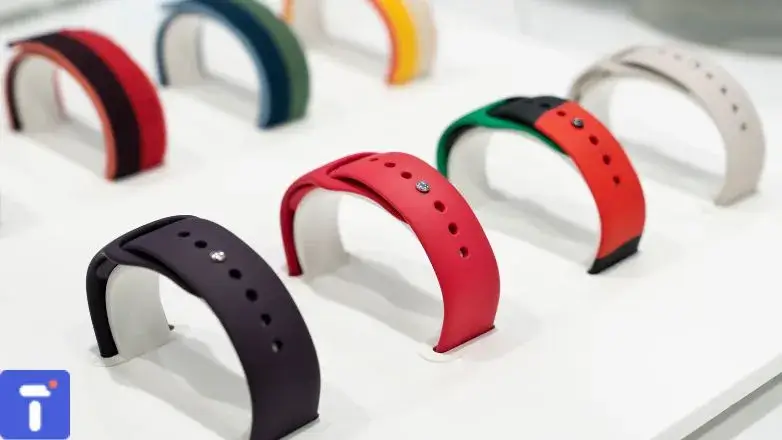
Apple lists several distinct materials in its watch bands, including fluoroelastomer, silicone, nylon, polyester yarn, leather, stainless steel, and titanium. Check the material of your own band rather than relying only on its product name. For a closer look at comfort and material choices, see our guide to Apple Watch Bands for Sensitive Skin.
How to Clean an Apple Watch Band That Smells
Start with the cleaning instructions for the exact band you own. Apple’s cleaning guidance applies to Apple-branded bands. If you use a third-party band, follow the care label or instructions from that manufacturer because its material and finish may have different limits.
Step 1: Remove the Band From the Watch
Turn off your Apple Watch, remove it from the charger, and detach the band before cleaning. This lets you clean the strap without wetting the watch. Keep the watch away from sinks, cleaning solutions, and loose water while you work.
Step 2: Wipe Away Surface Dirt and Residue
Use a clean, soft, non-abrasive, lint-free cloth. Begin dry. If the band instructions allow it, lightly dampen the cloth with fresh water and wipe the surfaces that touch your skin, including the underside and around adjustment points. Do not scrub with a rough brush or use a sharp tool to dig into seams.

Step 3: Use the Correct Cleaning Method for Your Band
Sport Band, Solo Loop, and Other Apple Sport-Style Bands
For Apple Solo Loop, Braided Solo Loop, Sport Band, Sport Loop, Ocean Band, Alpine Loop, and Trail Loop, Apple says to wipe the band with a non-abrasive, lint-free cloth, lightly dampened with fresh water if needed. Apple also permits mild hypoallergenic hand soap for these listed bands. Wipe away residue and dry the band with a non-abrasive, lint-free cloth before attaching it again.
FineWoven Bands
FineWoven bands, including Magnetic Link and Modern Buckle styles, require a different method. Apple instructs users to mix 1 teaspoon (5 ml) of washing liquid with 1 cup (250 ml) of water. Dampen a lint-free cloth in the solution, wring it out, and gently rub the band for one minute. Wipe it again with a separate cloth slightly dampened with fresh water. Do not soak the band. Dry it with a soft, lint-free cloth and lay it flat for at least 24 hours before wearing it again.
Leather Bands
Wipe leather with a non-abrasive, lint-free cloth. If necessary, lightly dampen the cloth with fresh water. Do not soak leather or leave it wet. Let it dry thoroughly away from direct sunlight, high temperatures, and high humidity. Leather is not water-resistant, so avoid using it for sweaty workouts or activities where it will become wet.
Metal Bands, Buckles, and Closures
Wipe metal bands, buckles, and closures with a non-abrasive, lint-free cloth. Lightly dampen the cloth with fresh water if needed, then dry the parts carefully. Pay attention to accessible gaps around links and the clasp, but do not force liquid into moving joints or use metal picks that can scratch the finish. Follow any additional instructions supplied by the band maker.
Third-Party Nylon, Fabric, and Other Bands
Check the brand’s care instructions before washing a third-party strap. Some fabric bands can be cleaned with a damp cloth, while others may allow gentle hand-washing. Do not put a band in a washing machine, use detergent, or soak it unless the manufacturer specifically allows that method. Avoid assuming that a cleaning method suitable for an Apple-branded band is also safe for an aftermarket version.
Step 4: Dry the Band Completely Before Reattaching It
Blot away excess water with a clean, lint-free cloth and let the band air-dry in a cool, ventilated place. Keep it away from hair dryers, radiators, direct heat, and strong sunlight. Woven and thick materials may need substantially longer than a smooth sport band. Do not put a damp strap back on your wrist simply because its outer surface feels dry.
Step 5: Clean the Watch Separately
Use Apple’s instructions for the watch case and back crystal, not the band-cleaning method. Apple advises using a non-abrasive, lint-free cloth and warns against soaps, cleaning products, abrasive materials, compressed air, ultrasonic cleaning, and external heat on the watch. Keep moisture out of openings and never submerge the watch in a cleaning solution.
Can You Use Alcohol Wipes on an Apple Watch Band?
Only on the band types for which Apple says they are suitable. Apple permits a 70% isopropyl alcohol wipe, a 75% ethyl alcohol wipe, or a Clorox Disinfecting Wipe on the exterior surfaces of the watch and certain listed bands, including Solo Loop, Sport Band, Nike Sport Band, Ocean Band, and metal bands. Apple says not to use these wipes on fabric or leather bands.
That list is not permission to use alcohol on every Apple or third-party strap. Apple does not list every woven style as alcohol-compatible, and third-party coatings may have different limits. Do not use bleach or hydrogen peroxide. For routine odor control, material-appropriate cleaning and complete drying should come first. Disinfect only when the manufacturer permits the product for your exact band.
How Often Should You Clean Your Apple Watch Band?
There is no single official cleaning schedule for every Apple Watch band. Your routine should reflect how often you wear it, how much you sweat, and whether it becomes visibly dirty. Northwestern Medicine advises that people who wear a wristband regularly and lead an active lifestyle may find a weekly cleaning routine useful, while occasional wearers may need to clean every couple of weeks. Clean it sooner whenever it is visibly soiled or has been exposed to heavy sweat.
- After a sweaty workout: Remove the watch when practical, clean your skin, and wipe or rinse the band only as its care instructions allow. Dry everything before wearing it again.
- During everyday use: Check the underside and clasp regularly for residue. Do a more complete clean based on how often you wear the band.
- After contact with sunscreen or lotion: Remove visible residue promptly using the method approved for that material.
- Before storing a spare band: Make sure it is clean and completely dry. Store it in a cool, dry place.
Why Does My Apple Watch Band Still Smell After Cleaning?
If the odor returns soon after cleaning, check the following before buying a replacement:
- The band is still damp: Give it more drying time, especially if it is woven, braided, or thick.
- Residue remains in a hidden area: Inspect the underside, adjustment holes, buckle, and accessible attachment surfaces.
- The watch itself needs attention: Clean the watch case and back crystal separately using Apple’s instructions.
- The cleaning product left a film: Use only a suitable product and remove residue as directed. Avoid layering several cleaners or mixing chemicals.
- The material is worn or damaged: Cracking, peeling, fraying, or a sticky surface may mean the band needs replacing.
- The odor may be coming from your skin: Wash and dry your wrist separately. If you notice a rash or persistent skin symptoms, stop wearing the band and seek medical advice.
How to Prevent Apple Watch Band Odor From Coming Back
- Choose a band that suits your routine. Use a workout-friendly band for exercise and keep leather or other moisture-sensitive materials for dry conditions.
- After heavy sweating, clean and dry your wrist, the band, and the watch as their instructions allow.
- Give your wrist a short break from the watch when practical, especially when the skin or band feels damp.
- Wear the watch snugly but comfortably. Apple recommends a fit that is not too tight or too loose and allows room for your skin to breathe.
- Keep sunscreen, lotion, soap, and other residue from building up under the band. Remove visible residue with a safe method rather than using perfume or deodorant to cover the smell.
- Rotate between compatible bands if you wear your watch for long periods, allowing the unused band to dry fully before its next use.
- Check water-resistance guidance for both the watch and the band. Some bands, including leather, FineWoven, and certain metal styles, are not water-resistant even when the watch model itself has a water-resistance rating.
For a more comfortable fit and material comparison, read Apple Watch Bands for Sensitive Skin. If you are choosing a replacement for exercise, see our guide to Apple Watch Bands for Working Out. You can browse more practical watch advice on Topreviewd Watch Guides.
When Should You Replace the Band or Get Medical Advice?
You do not need to replace a band every time it develops an odor. First try the correct cleaning method and allow enough time for it to dry. Consider replacing it if the smell remains after repeated material-appropriate cleaning, returns quickly, or appears alongside visible damage such as cracks, peeling, fraying, or a sticky surface. Also replace a band if its clasp or connector no longer holds securely.
Odor by itself cannot diagnose a skin infection. Stop wearing the watch on the affected area if you develop itching, redness, swelling, pain, broken skin, or a rash. Seek medical advice if symptoms are severe, persist after you stop wearing the band, or show signs of infection. Apple also notes that some people can react to materials or to prolonged contact with irritants such as sweat and soap.
Frequently Asked Questions
Why does my Apple Watch band smell like vinegar or sour sweat?
A sour smell can develop when sweat, skin oils, and residue remain in a warm, damp area under the band. The smell cannot identify the exact cause on its own. Clean the band according to its material and let it dry fully. Do not apply vinegar as a home remedy unless the band manufacturer specifically approves it.
How do I get the smell out of a silicone or sport-style Apple Watch band?
Remove the band and follow the care instructions for its exact material. For Apple’s listed sport-style bands and loops, use a soft, non-abrasive, lint-free cloth with fresh water and, when needed, mild hypoallergenic hand soap. Wipe away residue and dry it with a lint-free cloth before wearing it again. Do not assume every third-party band has the same care limits.
Can I use rubbing alcohol to clean my Apple Watch band?
Apple permits specified alcohol wipes on certain bands, including Solo Loop, Sport Band, Nike Sport Band, Ocean Band, and metal bands. Apple says not to use them on fabric or leather. Check the official guidance and the instructions for your exact band before using alcohol.
Can I wash my Apple Watch band with soap and water?
Some Apple-branded sport and loop bands can be cleaned with fresh water and mild hypoallergenic hand soap. FineWoven, leather, metal, and third-party bands have different care requirements. Do not soak a band unless its manufacturer explicitly allows it, and do not wash the watch itself with soap or cleaning products.
Does a fabric Apple Watch band smell more than a silicone band?
Not in every case. Fabric can absorb moisture and may need longer to dry, while a close-fitting sport band can hold sweat against the wrist. Odor depends on material, fit, activity, climate, and cleaning habits. Choose the style that works for your routine and follow its care instructions.
Why does my Apple Watch band smell even after I shower?
Showering does not remove residue trapped in the band, buckle, or adjustment points. The band may also remain damp after you put it back on. Clean the band separately, clean your wrist, and let both dry completely before wearing the watch again.
Can I use baking soda, vinegar, or bleach to remove the smell?
Do not assume household remedies are safe for watch bands. Abrasive powders can affect finishes, and Apple specifically warns against bleach and hydrogen peroxide on the watch and listed bands. Vinegar and other household cleaners are not part of Apple’s general band-care instructions. Use the method approved for your exact material instead.
How often should I clean my Apple Watch band?
Clean it whenever it is visibly dirty or has been exposed to heavy sweat. For frequent, active use, a weekly clean is a reasonable routine to consider; occasional users may need it less often. Dry the band after workouts and follow the manufacturer’s instructions. The right interval depends on use and material.
Does a smelly Apple Watch band mean it has bacteria or that I have an infection?
No. Sweat and residue can cause odor, and microbes can also collect on frequently worn wristbands, but smell alone does not prove harmful bacterial growth or an infection. Stop wearing the band if you develop skin irritation and seek medical advice for persistent or worsening symptoms.
Editorial Note
This guide is independent editorial content from Topreviewd. It is intended to help readers understand routine band care and is not a substitute for the cleaning instructions supplied with a specific product or for professional medical advice. Apple-branded and third-party bands can use different materials and finishes, so check the manufacturer’s instructions before trying a cleaner.
Trusted Sources
- Apple Support: How to Clean Your Apple Watch
- Apple Support: Wearing Your Apple Watch
- Apple Support: About the Water Resistance of Your Apple Watch
- Northwestern Medicine: Is Bacteria Lurking on Your Smartwatch Band?
- Peer-Reviewed Study: Microbial Contamination of Smart Watches in Dermatological Surgeries
How This Guide Is Researched and Kept Current
This guide was reviewed against Apple’s published instructions for cleaning Apple Watch bands, wearing the watch comfortably, and understanding water resistance. Health-related context was checked against Northwestern Medicine’s wristband hygiene guidance and published research on microbial contamination of smartwatches. Recommendations are separated by material because cleaning methods that are suitable for one band may damage another. The article is reviewed when manufacturer guidance or relevant evidence changes. Prices, availability, accessories, and third-party care instructions can vary, so readers should verify the current information for their own product. If you spot an error or a material change, please contact us through the Contact Us page.
About the Author
Abdul Khader is a watch enthusiast, researcher and writer, and the person behind Topreviewd. He writes about luxury and designer watches, automatic and quartz movements, materials, sizing, straps, crystals and water resistance, comparing watches across different price points so readers can judge what they get for the money. His approach is practical. He checks specifications, points out when sources disagree, and keeps published details separate from his own opinion. Read more on the About Page, or reach him through the Contact Us page.