
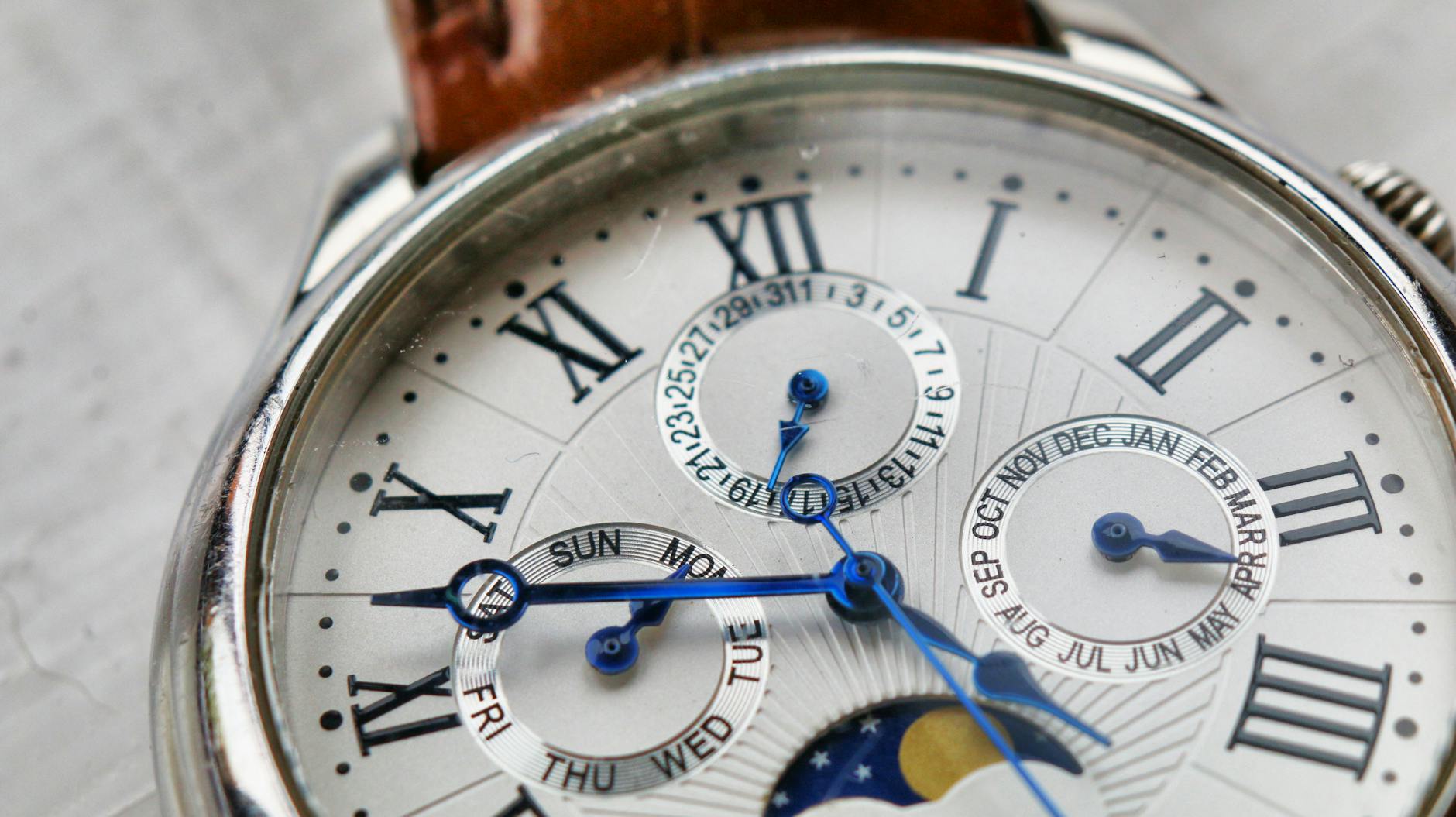
A watch says something about the person wearing it, and choosing one is harder than it looks. Hundreds of models, dozens of styles and three very different ways of powering a watch can make a first purchase confusing. The good news is that almost every wristwatch fits into a few simple groups, and once you know them, the decision gets much easier.
Quick answer: the different types of watches are grouped by movement (manual, automatic and quartz), by display (analog, digital and analog-digital) and by style (dive, pilot, field, dress, chronograph, sport, smartwatch and luxury). This guide explains each type in plain language, compares them side by side and shows you how to match a watch to your wrist, budget and daily routine.
Written by Abdul Khader, watch enthusiast, researcher and writer at Topreviewd. Last updated: September 28, 2026
Key Takeaways
- Quartz watches are the most accurate and the cheapest to run, automatic watches are the most popular mechanical choice, and manual watches suit people who enjoy a daily winding ritual.
- Analog displays look classic, digital displays add features such as alarms and timers, and analog-digital watches give you both.
- The five styles most collections are built around are dress, dive, sport, pilot and field watches.
- Case size, water resistance and budget matter as much as the type, so check all three before you buy.
Types of Watches at a Glance
Use this table to get a quick picture of the main watch types before reading the details below. The trade-off column shows what you give up in exchange for each type’s strengths.
| Watch type | Grouped by | Best for | Main trade-off |
|---|---|---|---|
| Manual | Movement | Enthusiasts and slim dress watches | Needs regular winding |
| Automatic | Movement | Everyday wear with a mechanical feel | Stops if left unworn for a few days |
| Quartz | Movement | Accuracy and low upkeep | Battery changes and less mechanical charm |
| Analog | Display | Classic looks at any budget | Fewer built-in functions |
| Digital | Display | Alarms, timers and rugged use | Less formal appearance |
| Dive | Style | Swimming, diving and all-round use | Often thick and heavy |
| Pilot | Style | Legibility and travel | Large cases can overwhelm small wrists |
| Field | Style | Outdoors and casual wear | Plain design |
| Dress | Style | Suits, weddings and formal events | Limited water resistance |
| Chronograph | Style | Timing events | Busier dial and thicker case |
| Sport | Style | Training and active days | Can look too casual for formal settings |
| Smartwatch | Style | Fitness tracking and notifications | Frequent charging and shorter lifespan |
| Luxury | Style | Craftsmanship, status and long-term value | High price |
What Are the Different Types of Watches by Movement
The movement is the engine of a watch, the part that makes it tick and keeps time. It is often called the heart of the watch, and it is the most important choice you will make because it decides how the watch is powered, how accurate it is and how you care for it. There are three main types of watch movement.
Manual (Hand-Wound) Watches
A manual watch stores energy in a mainspring that you wind by turning the crown. A full wind commonly lasts about 36 to 48 hours, so most owners wind the watch once a day, often as a morning habit. It is the oldest type of watch movement, and it has not disappeared. Hand-wound movements can be made thinner than automatic ones, which is why they remain popular in dress watches, and some famous chronographs, such as the Omega Speedmaster Professional, are still hand-wound.
- Pros: slim case, traditional feel, no battery to replace.
- Cons: needs daily attention, and the watch stops if you forget to wind it.
Automatic (Self-Winding) Watches
An automatic watch works like a manual one, with one difference: you do not need to wind it yourself. A weighted rotor inside the case swings as your wrist moves and winds the mainspring for you. Most automatic watches hold a power reserve of roughly 38 to 80 hours, so if you leave one in a drawer over a long weekend it may stop, and you will need to wind it briefly and reset the time. If you want to understand how these watches run without a battery, read our guide on How Watches Work Without Batteries.
Accuracy varies. A typical mechanical watch gains or loses a few seconds per day, while a certified Chronometer is tested to a tighter standard. The COSC standard allows a range of about minus 4 to plus 6 seconds per day.
Quartz Watches
Quartz is the simplest and most common movement. A battery sends a small current through a quartz crystal, which vibrates 32,768 times per second. A tiny circuit counts those vibrations and turns them into one precise pulse every second. Because of this, quartz is the most accurate of the three movement types, typically within about 15 seconds per month. The battery usually needs replacing every two to five years. You can read more about the technology on the Quartz Clock reference page.
Several variations sit inside the quartz family:
Solar Watches
Solar watches, such as Citizen Eco-Drive, Seiko Solar and Casio Tough Solar models, charge a rechargeable cell from natural or artificial light, so many of them run for years without a battery change. Our comparison of Solar vs Automatic Watches shows how they differ in cost and care.
Kinetic Watches
Kinetic watches use a rotor like an automatic, but the motion generates electricity that is stored in a rechargeable cell instead of winding a spring. They combine quartz accuracy with self-charging convenience.
Radio-Controlled (Atomic) Watches
Radio-controlled watches automatically sync with time signals broadcast from national atomic clock stations, which corrects the time and often the date for you. They are especially useful if you dislike setting your watch after a battery change or a daylight saving shift.
Manual vs Automatic vs Quartz: Which Movement Is Better
No movement is better in every situation. Quartz wins on accuracy and price, while mechanical movements win on craftsmanship and longevity. There is also a hybrid option: Seiko’s Spring Drive uses a mainspring for power and a quartz regulator for accuracy. For deeper comparisons, see our articles on Mechanical vs Quartz Watches and Automatic Watch vs Quartz.
| Feature | Manual | Automatic | Quartz |
|---|---|---|---|
| Power source | Mainspring wound by hand | Mainspring wound by wrist motion | Battery, solar or kinetic cell |
| Typical accuracy | About 5 to 20 seconds per day | About 5 to 20 seconds per day | About 15 seconds per month |
| Second hand | Sweeps smoothly | Sweeps smoothly | Usually ticks once per second |
| Upkeep | Daily winding and periodic service | Periodic service, usually every 5 to 10 years | Battery change every 2 to 5 years |
| Price range | Mid to high | Affordable to very high | Very low to high |
What Are the Different Types of Watches by Display
The display is how a watch shows the time. There are three main display types, and each one changes how quickly you can read the time and what extra features you get.
Analog Display
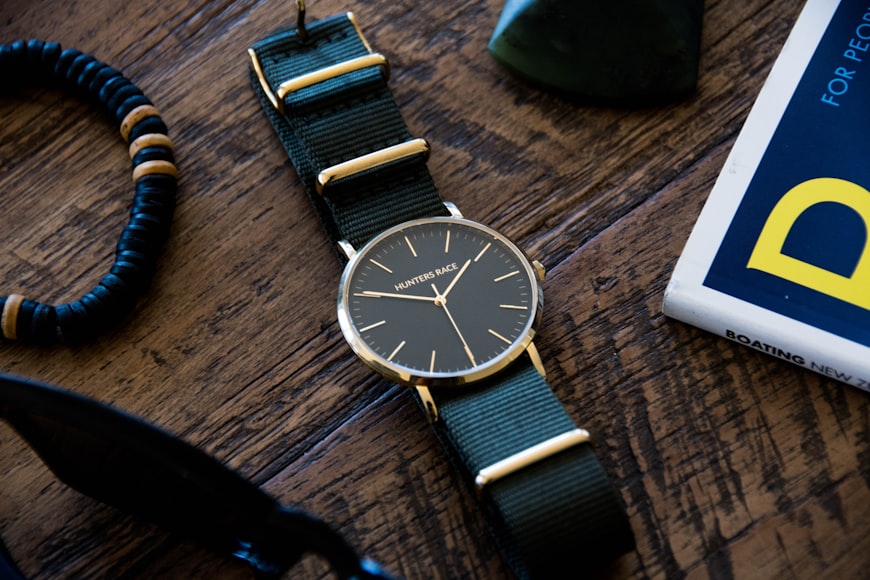
Analog is the traditional style of watch display. Hands point to the hour and minute on a dial, and many models add a third hand for seconds. Analog watches can also include complications such as a day and date window. They are easy to read at a glance, simple to use and available at every price point, which is why they remain the default choice for most buyers.
Digital Display
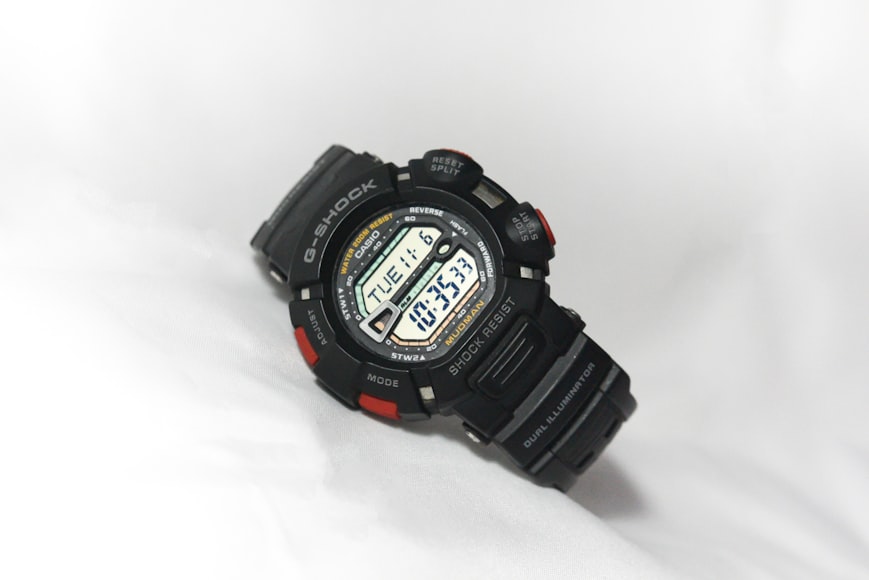
Digital watches show hours, minutes and seconds as numerals on an electronic screen, usually LCD, LED or OLED. Because they rely on a circuit instead of moving hands, they can pack in alarms, stopwatches, countdown timers and world time at a low cost. That makes them a favorite for sport, work and outdoor use, and rugged lines such as Casio G-Shock have made the style iconic.
Combined Analog-Digital Display
Analog-digital watches, sometimes called ana-digi or hybrid display watches, combine hands with a digital screen. You get the quick readability of hands and the extra data of a digital panel, and one display can act as a backup if the other stops working. They are popular for sports, fitness and field use. Do not confuse them with hybrid smartwatches, which look like traditional watches but add limited smart features.
What Are the Different Types of Watches by Style
Style groups watches by purpose. Many of these categories began as professional tools for divers, pilots or soldiers and later became everyday fashion. If you want a starting point, the dress, dive, sport, pilot and field styles form the backbone of most watch collections.
Dive Watch
A dive watch is built to go underwater. The international standard for dive watches, ISO 6425, requires at least 100 meters of water resistance, a unidirectional rotating bezel for tracking elapsed time, a legible luminous dial and a way to check that the watch is working in the dark. Nearly all dive watches use a screw-down crown for better protection against water. Modern dive watches are also everyday favorites because they are tough, easy to read and work with both casual clothes and a suit.
Water Resistance Ratings Explained
| Rating | What it usually means |
|---|---|
| 30 m (3 ATM) | Survives splashes and rain, but not swimming |
| 50 m (5 ATM) | Handles brief contact with water, such as hand washing |
| 100 m (10 ATM) | Suitable for swimming and snorkeling |
| 200 m (20 ATM) | Suitable for water sports and recreational diving |
| 300 m and above | Designed for scuba diving |
These numbers come from laboratory pressure tests, not real depth, and seals wear over time. Hot showers and steam can also damage gaskets, and the crown must always be fully closed. See the Water Resistant Mark reference for more detail, and read the general Diving Watch overview if you plan to dive.
Pilot (Aviator) Watch
Pilot watches were designed for aviators, so readability and durability come first. Typical features include a large case, a high-contrast dial with big luminous numerals, an oversized crown that is easy to grip with gloves, and a sturdy strap. Classic German flieger watches, known as B-Uhren, add a triangle with two dots at 12 o’clock for orientation. Many modern pilot watches include a chronograph or a second time zone for international travel, and the style has become a fashion favorite. Learn more in the Pilot Watch reference.
Field Watch
The field watch began as a military watch built for officers who needed to synchronize operations, read the time in the dark and survive rough conditions. Function came before form, so field watches have simple dials, matte finishes, clear numerals and a durable strap, often canvas or nylon. Most are compact and comfortable, which makes them good all-day watches and a solid choice for hiking and other outdoor activities. See the Field Watch reference for its history.
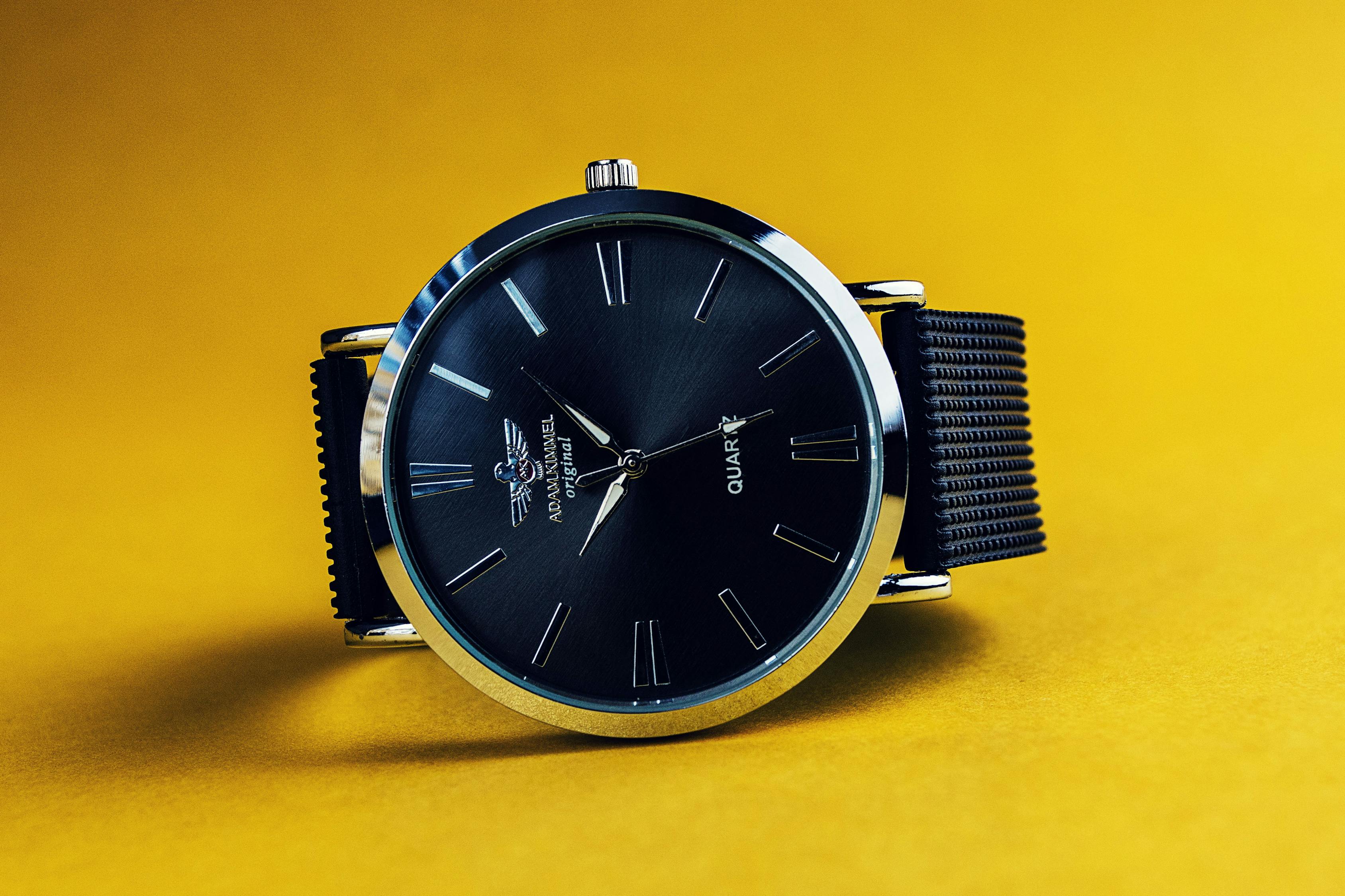
Dress Watch
Dress watches are defined by what they leave out. They have thin cases, clean dials, slim hands and usually a leather strap or a fine metal bracelet, so they slide easily under a shirt cuff. They suit suits, weddings, interviews and formal dinners. Because thin cases leave little room for gaskets, most dress watches have modest water resistance, so keep them away from swimming pools. If you want a respected mid-range name in this category, our review asks Is Tissot a Good Watch Brand.
Chronograph Watch
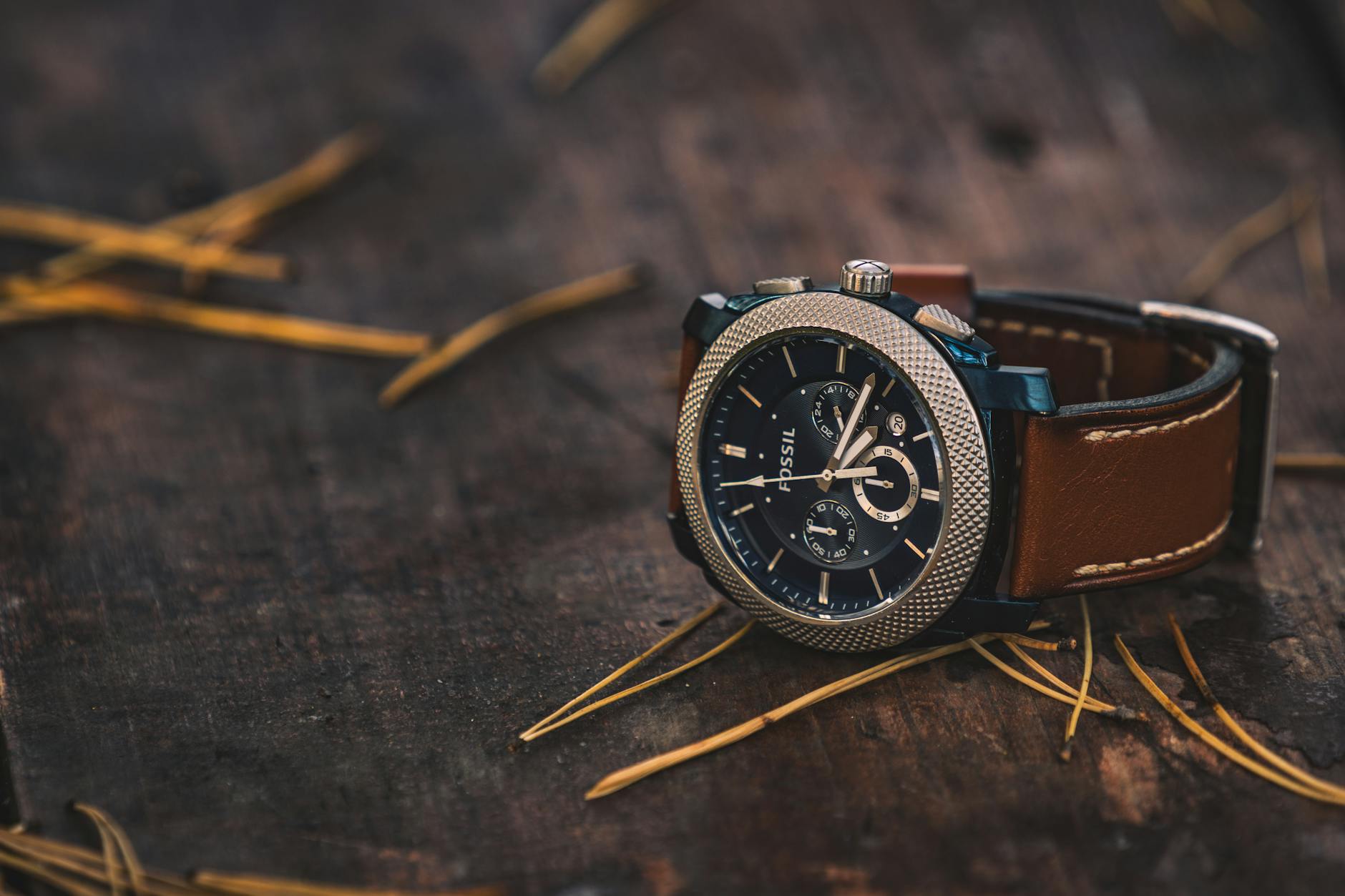
A chronograph watch is a regular watch with a built-in stopwatch. The word comes from Greek roots meaning time writer. Chronograph is a feature as much as a type, because you will find it on pilot, racing, sport and dress watches alike. Look for small subdials on the face and two pushers on the side of the case. Many chronographs also carry a tachymeter scale on the bezel, which lets you measure speed over a known distance. Read the Chronograph overview for background.
How to Use a Chronograph
- Press the top pusher to start timing.
- Press the same pusher again to stop.
- Press the bottom pusher to reset the hands to zero.
Do not press the pushers underwater unless the manufacturer says the watch is designed for it.
Sport Watch
Sport watches are built to take a beating and to measure what an athlete cares about, such as elapsed time, pace, heart rate or distance. They are usually water resistant, shock resistant and comfortable on a rubber or silicone strap. Many have become everyday watches because they work from the office to the gym. Modern sport watches often overlap with smartwatches, so check whether you want simple timing or full GPS tracking.
Smartwatch

A Smartwatch is a wearable computer that works like a small smartphone on your wrist. It has a touchscreen, tracks fitness and sleep, shows notifications, runs apps, supports contactless payments and can make calls on some models. The trade-offs are a battery that needs charging every day or every few days and a shorter useful life than a mechanical watch, because software support eventually ends. Our comparison of a Wrist Watch vs Smartwatch covers this in detail. If you have a specific need, see our picks for the Best Smart Watch for Heart Problems, the Best Smartwatches for Females and the Best Smartwatch for Kids.
Luxury Watch
Luxury watches use premium materials such as precious metals, sapphire crystal and sometimes gemstones, and they are usually finished by hand with in-house movements. Luxury describes a price and quality tier, not a mechanism, so a luxury watch can be automatic, manual or quartz. Because demand is high, counterfeits are common, so buy from an authorized dealer or a reputable reseller that provides documentation. Fashion brands sit in a different tier, and our guide to Giorgio Armani vs Emporio Armani vs Armani Exchange explains where each one fits, alongside our reviews of Armani Exchange vs Emporio Armani and Armani Exchange Watches.
Specialised and Complication Watches
A complication is any function on a watch beyond telling the hours, minutes and seconds. The Complication reference lists dozens of them. These are the specialised types you are most likely to meet while shopping.
GMT and World Time Watches
GMT watches add a fourth hand that tracks a second time zone on a 24-hour scale, which made them popular with airline crews in the 1950s and makes them ideal for frequent travelers. World time watches go further and display many time zones at once.
Moon Phase and Calendar Watches
Calendar watches show the date, day and month, and the most elaborate versions add a moon phase display that follows the lunar cycle. They are valued for their charm as much as their function. You can browse examples in our review of the Best Moon Phase Watches.
Skeleton Watches
Skeleton watches cut away the dial and movement plates so you can see the gears turning. They are decorative and collectible, but the busy dial can be harder to read than a solid one.
Military and Tactical Watches
Military and tactical watches are made for soldiers, law enforcement and adventurers. They combine rugged cases, strong water resistance, tough straps and sometimes a compass or night-readable dial for use in the field.
Racing Watches
Racing watches suit motorsport and other timed events. They typically have a large dial with big numerals, a chronograph and a tachymeter scale, and many use bold colors for quick legibility.
Casual and Everyday Watches
Casual watches are relaxed, affordable and comfortable for daily wear. Enthusiasts often call a tough, inexpensive one a beater, meaning a watch you can wear while gardening, washing the car or playing sport without worrying about scratches. Owning one also protects your more expensive pieces.
Types of Watches for Men, Women and Kids
Every watch type described above is available in a range of sizes, so treat size as a comfort choice rather than a gender rule.
Types of Watches for Men
Men’s collections usually revolve around dress, dive, sport, pilot and field watches, with case sizes commonly between 38 and 44 mm. A sensible starter set is one dress watch and one durable everyday watch.
Types of Watches for Women
Women’s watches cover the same styles, from dress and fashion watches to dive and sport models, in a wider spread of case sizes, often from 26 to 40 mm. If fit is your main concern, see our advice on the Smartwatch for Small Wrists and the Best Smartwatches for Females.
Types of Watches for Kids
Children do best with durable, water-resistant digital or simple analog watches that are easy to read. Our picks for the Best Smartwatch for Kids cover options with location sharing and parental controls.
Watch Cases, Crystals and Straps
Two watches of the same type can feel completely different because of what they are made from. These parts affect weight, durability and price.
Case Materials
- Stainless steel: tough, affordable and the most common choice.
- Titanium: lighter than steel and comfortable on the wrist, though it costs more.
- Ceramic: highly scratch resistant, but it can chip if struck hard.
- Resin or plastic: very light and inexpensive, common on digital and sport watches.
- Gold and platinum: used on luxury and dress watches for prestige and long-term value.
Watch Crystals
The crystal is the clear cover over the dial. Sapphire ranks about 9 on the Mohs Hardness Scale, so it resists scratches far better than mineral glass or acrylic, though mineral glass costs less and is harder to shatter. Our guide to Sapphire Crystal vs Mineral Glass explains the differences in full.
Strap Types
- Leather: classic and dressy, but it wears out and dislikes water.
- Metal bracelet: durable and versatile, and it suits both formal and casual outfits.
- Rubber or silicone: waterproof and comfortable for sport and diving.
- Nylon or canvas: light, breathable and inexpensive, and popular on field watches.
How to Choose the Right Type of Watch
Different lifestyles and careers call for different watches. Work through the steps below and you can narrow the field quickly.
Match the Watch to Your Lifestyle
| Your situation | Good choices | Why they work |
|---|---|---|
| Office and formal events | Dress watch, slim automatic or quartz | Slim case that fits under a cuff |
| Swimming and water sports | Dive watch or 100 m sport watch | Strong seals and a screw-down crown |
| Hiking and outdoors | Field, solar or military watch | Rugged, legible and low maintenance |
| Gym and training | Sport watch or smartwatch | Tracking, timers and durable straps |
| Frequent travel | GMT or pilot watch | Second time zone and clear dial |
| First watch | Analog quartz or an entry automatic | Reliable, affordable and easy to live with |
Choose the Right Size for Your Wrist
Measure your wrist with a soft tape just above the wrist bone, then use this table as a starting point. These ranges are general guidance, and personal taste matters too.
| Wrist circumference | Suggested case diameter |
|---|---|
| Under 6.5 in (16.5 cm) | 34 to 38 mm |
| 6.5 to 7.5 in (16.5 to 19 cm) | 38 to 42 mm |
| Over 7.5 in (19 cm) | 41 to 46 mm |
Also check the lug-to-lug length, which is the distance from the top lug tip to the bottom tip. It should not extend beyond the edges of your wrist. A watch with a short lug-to-lug can look better on a small wrist than a smaller-diameter watch with long lugs.
Set a Realistic Budget
Prices vary by market and currency, so treat these US dollar ranges as rough guides.
- Under about $100: quartz analog and digital watches, plus basic solar models.
- About $100 to $500: quality quartz and solar watches and entry-level automatics from Japanese and microbrand makers.
- About $500 to $2,000: Swiss quartz and automatic watches, better finishing and sapphire crystals.
- Above $2,000: in-house movements, precious materials and hand finishing.
Common Mistakes to Avoid
- Choosing by trend and ignoring how the size fits your wrist.
- Assuming water resistant means safe for swimming without checking the rating.
- Buying from unknown sellers, which raises the risk of counterfeits.
- Forgetting service costs when buying a mechanical watch.
- Ignoring strap comfort, which decides how often you actually wear the watch.
Basic Watch Care by Type
| Type | Care tip |
|---|---|
| Manual | Wind gently at about the same time each day and stop when you feel resistance |
| Automatic | Wear it regularly or use a watch winder, and plan a service every 5 to 10 years as your maker advises |
| Quartz | Replace a dead battery promptly, because a leaking cell can damage the movement |
| Water resistant | Have the seals tested about once a year if you swim or dive |
| Leather strap | Keep it dry and replace it when it cracks |
If your watch has stopped, our troubleshooting guide on How to Fix a Watch That Stopped Ticking walks through the common causes. Wearing a watch has everyday benefits too, which we cover in 8 Benefits of Wearing a Wristwatch.
Frequently Asked Questions About Types of Watches
What are the 3 main types of watches?
By movement, the three main types are manual, automatic and quartz. By display, they are analog, digital and analog-digital.
What are the 5 types of watches?
Collectors commonly point to dress, dive, sport, pilot and field watches as the five essential styles, because together they cover almost every occasion.
What is the most common type of watch?
Analog quartz watches are the most common worldwide because they are accurate, affordable and low maintenance.
What type of watch is best for everyday wear?
A field watch, a sport watch or a versatile dive watch on a steel bracelet works for most people. Choose 100 m of water resistance, a scratch-resistant crystal and a comfortable case size.
Which is better, automatic or quartz?
Quartz is more accurate and cheaper to own, while automatic offers craftsmanship and a battery-free design. Choose based on what you value, and see our full comparison of Automatic Watch vs Quartz.
What is the difference between analog and digital watches?
Analog watches show time with hands on a dial, while digital watches show it as numerals on an electronic screen. Digital watches usually include more functions, and analog watches usually look more classic.
What is a chronograph watch used for?
A chronograph works as a stopwatch, so you can time events such as a run, a race or a cooking task, and some models also measure speed with a tachymeter scale.
What type of watch should a beginner buy first?
A simple analog quartz watch or an entry-level automatic with a 38 to 41 mm case is a safe starting point. It teaches you what you like before you spend more.
What type of watch is the most accurate?
Quartz is the most accurate common movement, and radio-controlled watches that sync with atomic clock signals are more accurate still.
Are smartwatches better than traditional watches?
Neither is better for everyone. Smartwatches win on health tracking and connectivity, while traditional watches win on battery life, longevity and style. Our article on Wrist Watch vs Smartwatch helps you decide.
Which type of watch holds its value?
Most watches lose value after purchase. A limited number of luxury steel sports watches and rare vintage pieces have held or gained value, but buy for enjoyment first rather than as an investment.
Can I swim with any water resistant watch?
No. You need at least a 100 m rating for swimming, and the crown must be fully screwed down. A 30 m or 50 m watch is only suitable for splashes.
From My Experience: What Reviewing Watches Has Taught Me
I am Abdul Khader, and I have reviewed and written about watches from dozens of brands on Topreviewd. Writing those reviews taught me that the type of watch matters, but the details around it matter just as much: the movement, the case size, the strap and the water resistance rating. Here is what I have learned, with links to the full reviews.
Brands I Have Covered
- Everyday and budget-friendly: Invicta, Akribos, Stuhrling, Timex, Relic and Peugeot.
- Fashion and designer: Fossil, Guess, Michael Kors, Skagen, Daniel Wellington, MVMT, Nixon and Kenneth Cole.
- Established and luxury names: Citizen, Tissot, Wenger, Rolex, Armani Exchange, Emporio Armani and Giorgio Armani.
- Smartwatches and specialty: Apple Watch, other Smartwatches and Moon Phase Watches.
Movement Types: Lessons From My Reviews
Most of the Citizen models I have covered are Eco-Drive solar watches, which charge from natural or artificial light, so there is no battery to replace. That convenience is the main reason I point beginners toward solar quartz. Fashion brands such as Skagen, Daniel Wellington and MVMT generally rely on quartz for slim cases and low prices, while a luxury name like Rolex sits at the opposite end with mechanical movements. Seeing that range side by side is why I tell readers to decide on the movement first. If you choose a mechanical watch, read my guide on How Often You Should Service Your Watch.
Sizing: What Actually Fits
Spec sheets can mislead if you only look at one number. A 42 mm case that is 13 mm thick, like one Citizen model I reviewed, sits very differently on the wrist than a 9.5 mm lightweight model. I also check band length, since one metal bracelet I covered measures 7.5 inches and suits a larger wrist better. For help judging fit, see my guides to the Smartwatch for Small Wrists and the Smartwatch for Big Wrists.
Straps: Small Details Buyers Miss
When I review a watch, I check whether the leather is genuine or synthetic, whether a nylon strap may fade over time, and the lug width, because a replacement band has to match. One Citizen model I covered takes an 18 mm band, for example. These details decide how easy a watch is to restyle and how it ages with daily wear.
Water Resistance: Read the Rating
One point comes up in almost every review I write: a 100 m rating suits swimming and snorkeling but not scuba diving, while a 200 m rating gives you more margin for water sports. The number on the dial or case back matters more than the word waterproof, so check it before you get in the water.
The Differences That Matter Most Between Brands
After covering everything from budget watches to designer and luxury names, I find three differences matter most: the movement and how it is powered, the materials used for the crystal and case, and the support you get after the sale. My comparisons, such as Fossil vs Guess and Armani Exchange vs Emporio Armani, show how two similar-looking watches can differ in exactly these areas.
How This Guide Is Researched and Kept Current
I update this guide by comparing the watch type guides that currently rank well and rebuilding each section around the questions buyers actually ask. Technical figures rely on published standards and references, such as ISO 6425 for dive watches and COSC for chronometer certification. If I am unsure about a specification, I check it, and if brands publish different information, I point that out. Prices, sizes and service intervals are general guidance, and any personal opinion in this guide is my own experience and judgment, so check your watch maker’s manual before you act on it. If you spot an error, please tell me through the Contact Us page and I will review it. For further reading, see the Watch Overview, the Automatic Watch reference and the Teddy Baldassarre Guide to Watch Types.
Conclusion
Watch jargon can be confusing, but the choice becomes simple once you sort watches by movement, display and style. Decide how you want the watch powered, pick a display that you find easy to read, then choose a style that fits your daily life, wrist size and budget. If you are still unsure, start with an analog quartz or entry-level automatic in a versatile style, and add more specialised types as your taste develops.
About the Author
Abdul Khader is a watch enthusiast, researcher and writer, and the person behind Topreviewd. He writes about luxury and designer watches, automatic and quartz movements, materials, sizing, straps, crystals and water resistance, and he compares watches across different price points so readers can judge what they get for the money.
His approach is practical. He checks specifications, points out when brands disagree, and keeps published details separate from his own opinion. Read more on the About Page, or reach him through the Contact Us page.
Related Articles:
- Mechanical vs Quartz Watch: Which One Should You Buy?
- Solar vs Automatic Watch: The Honest Comparison
- Sapphire Crystal vs Mineral Glass for Watches Explained
- Difference Between Wrist Watch vs Smartwatch
- How to Fix a Watch that Stopped Ticking
- Is Invicta Watch a Good Brand
- Is Tissot a Good Watch Brand
- Giorgio Armani vs Emporio Armani vs Armani Exchange

Nice article, Check out Swoopcart.in