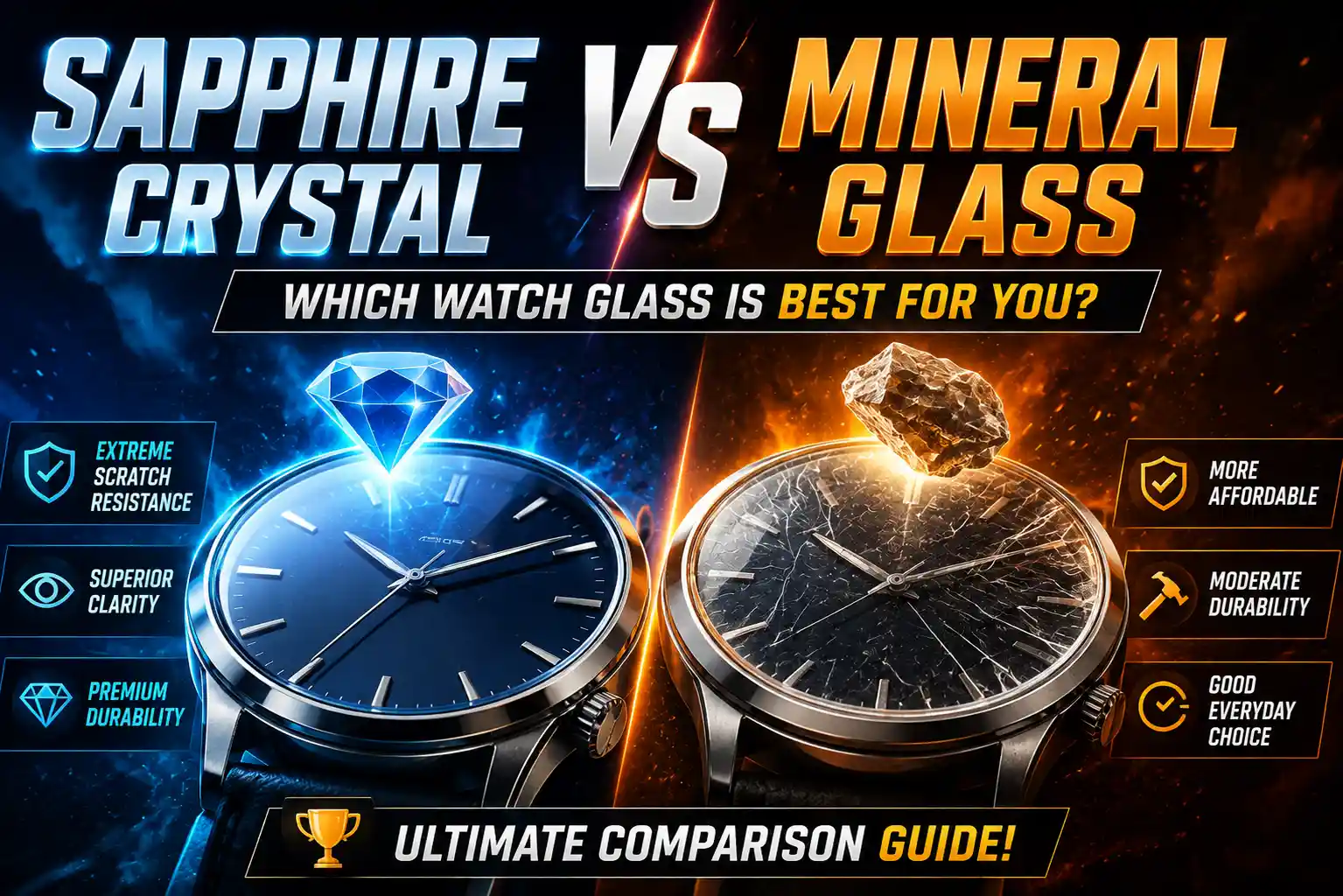
I have opened more watch cases than I can count over the last four years, both at the bench and for this blog, and one question comes up almost every week from readers and customers alike. Sapphire Crystal vs Mineral Glass: which one should you actually buy?
My name is Abdul Khader. I service and review watches for a living, and I still remember the two-year-old dive watch a customer brought me once. He thought the lens had fogged up. It had not. Daily wear on a construction site had left the mineral glass dulled with fine hairline scratches. That one repair taught me more about this comparison than any spec sheet ever did.
In this guide, I will walk you through what sapphire crystal and mineral glass actually are, how each one holds up in daily use, and which one fits the way you actually wear a watch. No inflated claims, no invented numbers, just what I have seen on the bench and what reliable sources confirm.
Key Takeaways
- Sapphire rates about 9 on the Mohs scale and resists scratches from almost everything except diamond, while mineral glass sits around 5 to 7.
- Sapphire’s hardness also makes it more brittle, so mineral glass can sometimes absorb a sharp knock that would chip sapphire.
- An uncoated sapphire crystal is actually more reflective than mineral glass, so an anti-reflective coating matters as much as the material itself for readability.
- Mineral glass is cheaper to buy and to replace, which is why it remains common on budget and tool watches.
Quick Verdict Before We Get Into It
If you want the short version first: sapphire crystal wins on scratch resistance and long-term good looks. Mineral glass wins on price and on handling a hard knock without cracking. Neither one is the villain here; they simply solve different problems.
What Is Mineral Glass?
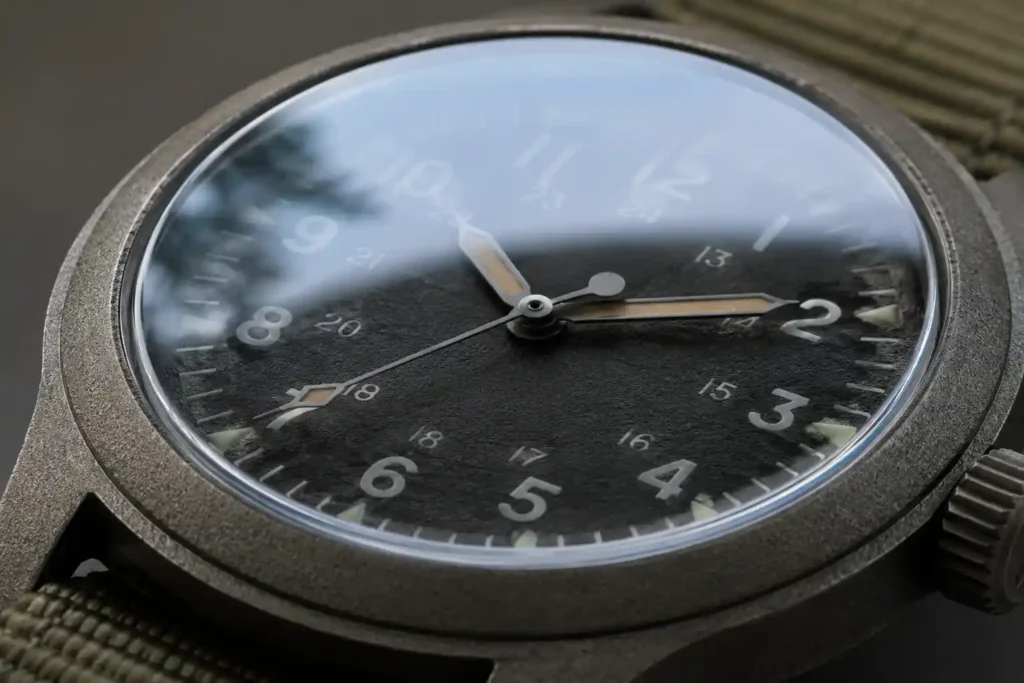
Mineral glass is standard glass, made mainly from silica, that goes through a tempering process. Manufacturers heat it and then cool it quickly, which rearranges the surface structure and makes the finished crystal noticeably tougher than ordinary window glass.
On the Mohs hardness scale, which runs from 1 to 10 with diamond at the top, mineral glass typically sits around 5 to 7 depending on the exact tempering method used. That is hard enough to survive most bumps and drops, but soft enough that dust, sand, and even a rough denim rivet can leave a mark over time.
Citizen, one of the larger watch brands, explains on its support site that mineral crystal is made using regular tempered glass and that the tempering process gives it a useful balance of scratch resistance and flexibility, which is one reason the brand uses it on models like its Promaster dive watches.
Advantages
- Costs far less to produce and to replace than sapphire crystal
- Handles sudden impact reasonably well because it flexes slightly instead of shattering outright
- Keeps watch prices accessible, especially in the budget and mid-range segments
- Simple to source and repair almost anywhere, including smaller local watch shops
Why It’s Widely Used
Mineral glass shows up on everything from a fifteen-dollar field watch to some genuinely well-built dive watches, because brands do not always need maximum scratch resistance. A tool watch that gets knocked around on a job site benefits more from a crystal that resists cracking than one that resists scratching. That trade-off is exactly why mineral glass has stayed relevant for decades instead of disappearing once sapphire became affordable to manufacture.
What Is Sapphire Crystal?
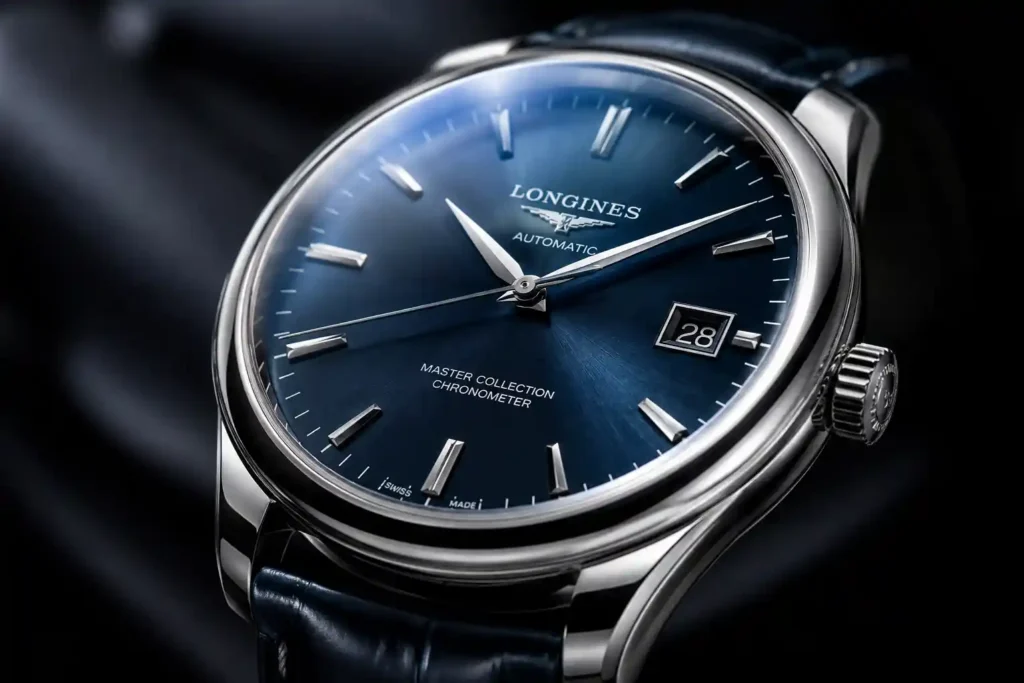
Sapphire crystal used in watches is synthetic sapphire, grown in a lab from crystallized aluminium oxide, the same base mineral family as natural sapphires and rubies, better known to chemists as corundum. Manufacturers grow the raw material at extremely high temperatures, then cut and polish it into the shape the watch needs.
The headline number here is hardness. Sapphire measures 9 on the Mohs scale, just one step below diamond at 10.
Citizen describes sapphire as one of the hardest substances used in watchmaking, and The Watch Company’s breakdown of Hardlex crystal confirms that most independent watch sources treat sapphire as close to scratch-proof in ordinary daily conditions.
Advantages
- Resists scratches from sand, keys, coins, and desk edges far better than mineral glass
- Keeps its optical clarity for years, which matters if you plan to keep the watch long term
- Often paired with an anti-reflective coating, which cuts down on glare and improves readability in bright sunlight
- Carries a premium, high-end feel that buyers associate with luxury watches
Sapphire Crystal vs Mineral Glass Watch: Quick Comparison
Here is the full comparison laid out side by side, so you do not have to scroll back and forth between sections.
| Feature | Sapphire Crystal | Mineral Glass |
| Mohs hardness | About 9 | About 5 to 7 |
| Scratch resistance | Excellent | Moderate |
| Impact behaviour | Hard but can be brittle | More forgiving under sharp impact |
| Optical clarity | Excellent, often with AR coating | Good |
| Typical cost | Higher | Lower |
| Long-term appearance | Stays clean for years | Can show scratches over time |
| Best suited for | Premium and daily-wear watches | Budget and tool watches |
Scratch Resistance: The Key Difference
This is where sapphire crystal genuinely earns its reputation. A Mohs rating of 9 means only a handful of natural materials, mainly diamond, can leave a mark on it. Everyday abrasives such as dust, sand, keys, and even most metals fall well below that threshold, so a sapphire crystal can go years without a single visible scratch.
Mineral glass, sitting around 5 to 7 on the same scale, is noticeably softer. It will not shatter from a sneeze, but fine grit trapped against the glass during normal wear can slowly dull its surface. If you have ever noticed a watch that looks slightly hazy under direct light despite being kept clean, that is usually accumulated micro-scratching on a mineral glass crystal.
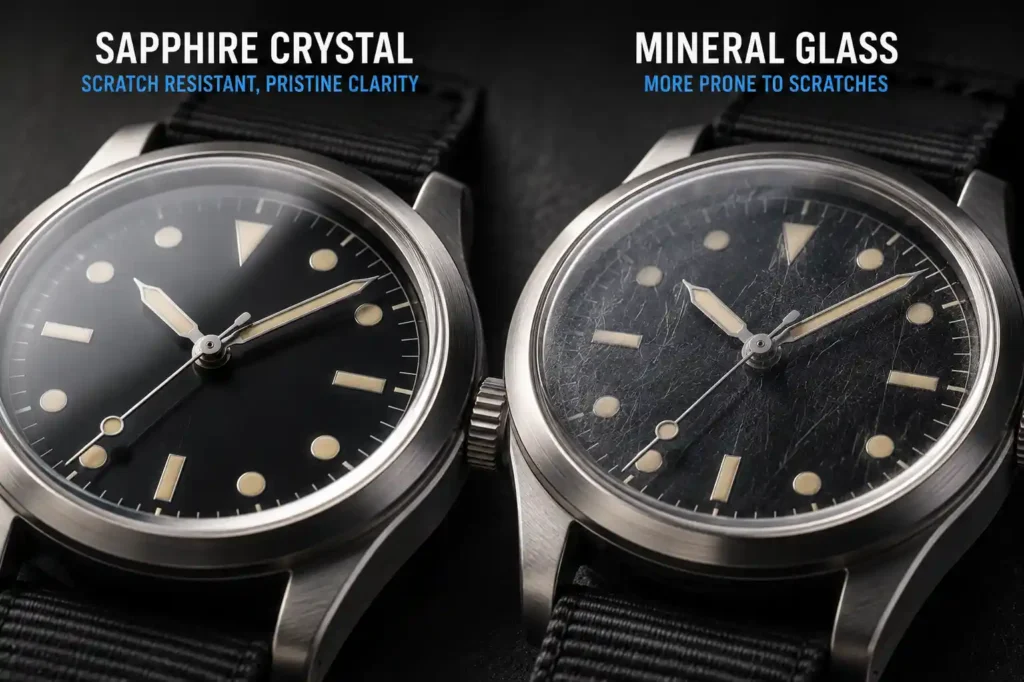
When customers ask me about sapphire crystal vs mineral glass scratch resistance specifically, I tell them the same thing every time. If you want a crystal that still looks new after five years of casual daily wear, sapphire is not close; it simply wins.
But Sapphire Isn’t Perfect Either
Hardness and toughness sound like the same thing, but they are not. A material can be extremely hard and still be brittle, and sapphire is a good example of exactly that. It resists scratches brilliantly, yet the same rigidity that makes it scratch-proof also makes it less forgiving of a sharp, concentrated blow.
Brittleness
Drop a sapphire crystal watch face down onto a hard corner or a rock edge, and there is a real chance the crystal chips or cracks. Mineral glass, being slightly more flexible, can sometimes absorb that same impact without failing. This is why some tool watches and dive watches still ship with mineral or hardened mineral crystals rather than sapphire, even at a higher price point.
I am not saying sapphire crystal shatters easily, because in normal daily wear it genuinely does not. I am saying it is not indestructible, and anyone telling you otherwise is selling you something.
Mineral Glass vs Sapphire Crystal: Clarity and Readability
Both materials offer good dial visibility out of the box. Sapphire can deliver excellent optical clarity, and many manufacturers add an anti-reflective coating to reduce glare, which noticeably improves readability outdoors. That coating is a separate surface treatment though, not a property of the sapphire itself, so it should not be confused with hardness.
The Glare Trade-Off Most Buyers Miss
Here is a detail I bring up with customers more than almost anything else: an uncoated sapphire crystal is actually more reflective than mineral glass, not less. Sapphire’s higher refractive index means light bounces off it more sharply without an anti-reflective coating applied. So if a watch advertises a sapphire crystal but never mentions an AR coating, do not assume it will be easier to read in bright sunlight. Mineral glass without any coating often looks clearer in direct light for this exact reason, even though it scratches more easily over time.
Mineral glass also offers solid clarity for the price, and a domed mineral crystal can even create a pleasant, slightly magnified view of the dial. Neither material is a dealbreaker for legibility on its own. What actually affects readability more is whether the watch has an AR coating at all, regardless of which crystal sits underneath it.
Which Costs More, Sapphire or Mineral Glass?
Mineral glass is cheaper to manufacture, which is one reason it helps brands keep entry-level watches affordable. Sapphire, because of the growing and cutting process involved, generally carries a real premium, and that premium shows up both in the sticker price of the watch and in the cost of a replacement crystal if you ever need one.
The exact gap varies a lot by brand, crystal shape, and whether the watch uses a flat or domed design, so I will not throw out a fake number here. What I can tell you from the bench is that a straightforward mineral glass replacement is almost always the cheaper repair of the two.
Sapphire Crystal vs Mineral Glass Durability Over Time
Durability is not a single number; it depends on what kind of damage you are trying to avoid. For cosmetic durability, meaning how clean the crystal looks after years of wear, sapphire has a clear advantage because it resists the everyday scratching that slowly dulls mineral glass.
For structural durability against sudden impact, mineral glass can occasionally have the edge, since its slight flexibility helps it absorb certain sharp knocks that could chip a rigid sapphire crystal. So when people ask about sapphire crystal vs mineral glass durability, my honest answer is that it depends on whether you are worried about scratches or about drops.
Sapphire Crystal vs Mineral Glass for Daily Wear
If you wear the same watch every single day, sapphire is usually the smarter pick. Think about everything your wrist touches in a normal day, desks, car doors, door frames, gym equipment, denim. All of that adds up to thousands of tiny opportunities for scratches over a year, and sapphire simply shrugs most of them off.
This same logic applies whether your watch runs on a battery, a mainspring, or sunlight. If you are also weighing movement types alongside the crystal, our guide on Solar vs Automatic Watch breaks down which movement suits daily wear best, and the crystal decision sits right alongside that choice.

Mineral glass is still a completely reasonable choice for daily wear if the watch itself is inexpensive, or if you genuinely do not mind a bit of cosmetic wear showing up over time. Not everyone needs a crystal that looks factory fresh after five years, and that is a perfectly valid stance.
Sapphire vs Mineral Glass for Sports, Dive and Outdoor Watches
There is no single winner for outdoor and sports use, and I say that as someone who has repaired plenty of both types coming back from hiking trips and dive holidays. Sapphire’s scratch resistance is genuinely valuable around sand, rock, and other abrasive surfaces. Mineral glass earns its keep when the watch is more likely to take a direct hit, since its impact tolerance can matter more than pristine looks on a tool watch.
Many dive and field watches historically leaned on mineral or hardened mineral glass for exactly this reason, and readers curious about how these tougher, low-maintenance watches keep running without constant battery changes should check our piece on How Do Watches Work Without Batteries, since several of the same movement families show up on rugged sports watches.
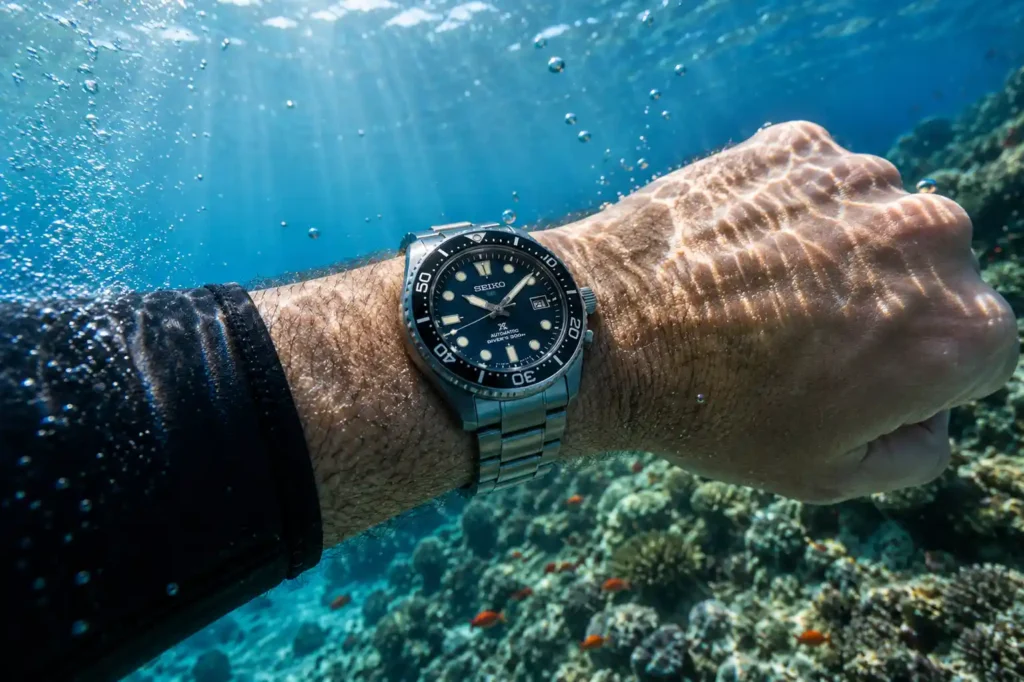
The case, bezel, and crystal thickness also play a real role here, not just the crystal material on its own. A thin sapphire crystal on a poorly designed case can still crack, while a thick, well-engineered mineral crystal can outlast expectations.
Where Does Acrylic Crystal Fit Into This
Sapphire and mineral glass are not the only two options, so it is worth a quick mention of the third common material I see on the bench. Acrylic, sometimes called plexiglass or Hesalite, is a clear plastic. It sits below mineral glass on the Mohs scale and scratches the most easily of the three, but it is also the most shatter resistant and the cheapest to replace, and light surface scratches can often be buffed out at home with polish rather than needing a full replacement.
Acrylic mostly shows up on vintage-style watches and a handful of rugged field watches today, since most modern brands have moved to mineral glass or sapphire for everyday models. If you come across a watch with an acrylic crystal, treat scratch resistance as its weakest point and its resistance to cracking as its strongest.
How to Tell Which Crystal Your Watch Has
If your watch did not come with clear documentation, there are a couple of simple checks you can do yourself before assuming:
- Flick the crystal gently with a fingernail. Sapphire tends to produce a higher-pitched, more glass-like tap, while mineral glass and acrylic sound slightly duller.
- Check the manufacturer’s listing or the case back, since many brands state the crystal type directly.
- Look at the water behavior if you can safely test it. A drop of water tends to bead more distinctly on mineral glass than on sapphire.
- If in doubt, ask a local watchmaker to confirm. It takes them seconds to identify by sight and feel.
Why Do Watches Still Use Mineral Glass?
It is a fair question. If sapphire is objectively harder, why hasn’t the entire industry switched over? A few honest reasons:
- Lower production and replacement cost keeps entry-level watches within reach
- Good all-round durability is often enough for how most people actually wear a watch
- Better tolerance for sharp impact in specific tool watch and dive watch designs
- Some proprietary versions, like Seiko’s Hardlex, push mineral glass performance closer to sapphire without the full price jump
- A large number of buyers simply do not need sapphire-level scratch resistance for how they use the watch day to day
Hardlex deserves a quick mention here. It is Seiko’s own hardened mineral glass, made by tempering standard mineral glass and treating it further to improve scratch and shatter resistance beyond a basic mineral crystal, while staying far cheaper than sapphire. Watchmakers on the WatchUSeek forums have discussed this trade-off for years, and the general consensus matches what I see on the bench: Hardlex sits in a comfortable middle ground rather than trying to compete directly with sapphire on hardness.
This same cost versus durability trade-off shows up again once you look past the crystal and into the movement itself. If you are curious how that plays out, our comparison of Mechanical vs Quartz Watch movements covers a similar decision between traditional engineering and everyday practicality.
Sapphire Crystal vs Mineral Glass: Which Is Better?
Here is the direct answer, since that is really what you came here for. For most people who wear one watch regularly and want it to look sharp for years, sapphire crystal is the better long-term choice. The extra upfront cost buys you scratch resistance that mineral glass simply cannot match.
If budget matters more than pristine cosmetics, or if the watch is going somewhere it might take a hard hit, mineral glass remains a genuinely smart choice rather than a compromise. This is the same kind of trade-off you run into when comparing movement types, and our breakdown of Automatic Watch vs Quartz covers a similar decision between traditional engineering and practical convenience.
Choose Mineral Glass If You:
- Are working with a tighter budget and want to keep costs down
- Wear a rugged, high-risk watch where impact resistance matters more than a flawless crystal
- Do not mind minor cosmetic wear appearing over the years
- Want a crystal that is cheap and easy to replace if something goes wrong
Choose Sapphire Crystal If You:
- Wear the same watch daily and want it to look new for as long as possible
- Are buying a watch you plan to keep and possibly pass down
- Care about long-term resale value, since a scratch-free crystal helps a watch hold its appeal
- Prefer the premium feel that comes with a higher-end material
Sapphire Crystal vs Mineral Glass: Pros and Cons
| Sapphire Crystal | Mineral Glass | |
| Pros | Excellent scratch resistance / Premium appearance / Strong long-term cosmetic performance | Lower cost / Good everyday durability / More forgiving under some impacts |
| Cons | Higher cost / Can chip or crack under a severe impact | Scratches more easily / May need replacement sooner if heavily scratched |
Which Watch Crystal Should You Choose?
| Your priority | Recommended crystal |
| Maximum scratch resistance | Sapphire |
| Daily wear on the same watch | Sapphire |
| Lower purchase price | Mineral glass |
| Lower replacement cost | Mineral glass |
| Premium, dressy feel | Sapphire |
| Frequent exposure to sand or grit | Sapphire |
| Concern about a single severe impact | Mineral glass is worth considering |
FAQs (Because People Keep Asking)
1. Is sapphire crystal better than mineral glass?
For most buyers, yes, especially if scratch resistance and long-term appearance matter to you. Mineral glass can still be the smarter pick when cost and impact tolerance matter more than a flawless finish.
2. Does sapphire crystal scratch?
Technically yes, but only from materials harder than itself, mainly diamond and a handful of lab-made ceramics. In ordinary daily wear, sapphire crystal essentially does not scratch.
3. Does mineral glass scratch easily?
Compared with sapphire, yes. Regular contact with dust, sand and rough surfaces will eventually leave marks, though it usually takes months or years of daily wear rather than a single incident.
4. Is mineral glass good for watches?
Yes. It remains a practical, widely used material, especially on watches where affordability and impact tolerance matter more than showroom-perfect looks.
5. Which is more expensive, sapphire or mineral glass?
Sapphire is generally more expensive to produce and to replace, though the exact gap depends heavily on the brand, the watch model, and the crystal shape.
6. Is sapphire crystal worth the extra money?
If you plan to wear the watch often for several years, most people find the extra scratch resistance worth paying for. If the watch is a casual backup piece, mineral glass is a perfectly sensible way to save money.
7. Which is more scratch resistant, sapphire or mineral?
Sapphire, without much debate. Its Mohs rating of roughly 9 puts it well above mineral glass, which typically sits around 5 to 7.
8. Why do cheap watches use mineral glass?
Mostly cost. Mineral glass is far cheaper to manufacture and replace, which lets brands keep entry-level watches affordable while still offering a reasonably durable crystal.
How This Guide Is Researched and Kept Current
I update this guide by checking current manufacturer documentation, such as Citizen’s own support materials, against independent sources and against what I see firsthand on the bench. Where a brand’s marketing and the physical reality of a repair disagree, I side with what the material actually does under normal wear rather than what a listing claims. Mohs hardness figures and cost ranges are general guidance, since exact numbers vary by brand and treatment, so check the specific watch’s documentation before you buy or replace a crystal. If you spot an error, please tell me through the Contact Us page and I will review it.
Final Verdict
Sapphire crystal wins this comparison for most daily wear and premium watches, mainly because its exceptional hardness keeps the crystal looking clean for years with almost no maintenance. Mineral glass remains a sensible, honest choice whenever affordability and impact tolerance matter more than a flawless finish.
Whichever side of this debate you land on, the right answer really comes down to how you wear your watch, not which material sounds more impressive on a spec sheet. If you are still choosing between watch styles more broadly, our guide to Different Types of Watches is a good next stop, and if a crystal ever cracks and the watch stops keeping time properly afterward, our guide on How to Fix a Watch That Stopped Ticking covers the common causes.
About the Author
Abdul Khader is a watch enthusiast, researcher and writer, and the person behind Topreviewd. He services and reviews watches, and writes about luxury and designer watches, automatic and quartz movements, materials, sizing, straps, crystals and water resistance, comparing watches across different price points so readers can judge what they get for the money.
His approach is practical. He checks specifications, points out when brands disagree, and keeps published details separate from his own opinion. Read more on the About Page, or reach him through the Contact Us page.
Related Articles: