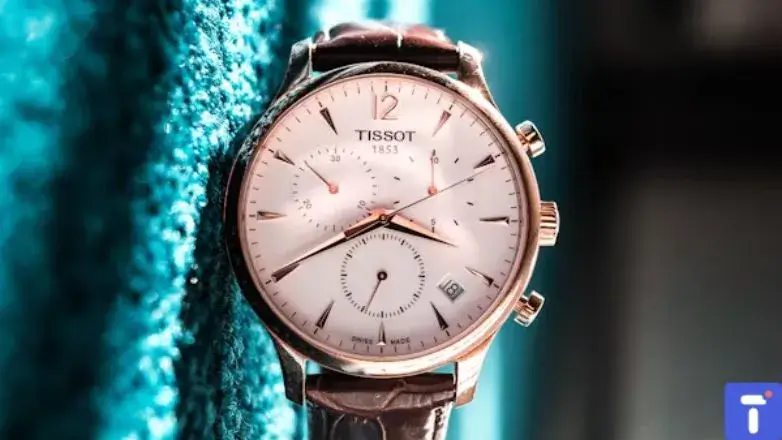
Tissot is a good watch brand for buyers who want a Swiss-made watch from an established manufacturer without moving into the price levels of traditional high-luxury brands. Its U.S. range includes quartz, automatic, solar and connected models, with familiar collections such as PRX, Gentleman, Seastar and Le Locle.
That does not mean every Tissot is the right choice for every buyer. Materials, movements, water resistance, dimensions and prices vary by reference. Some models are strong value, while others may be less compelling when compared with similarly priced Japanese or Swiss alternatives.
This review looks at Tissot’s heritage, Swiss Made status, build quality, current U.S. price examples, movement options, competitors, warranty and ownership costs. The aim is to help you decide whether a Tissot watch fits your budget and how you plan to wear it.
Written by Abdul Khader, researcher and writer at Top Reviewd. Last updated: November 4, 2026
Is Tissot a Good Watch Brand? The Quick Verdict
Yes, Tissot is a reputable Swiss watch brand and a sensible choice for many buyers in the mid-price segment. Its strongest reasons to consider it are its long watchmaking history, the range of Swiss-made quartz and mechanical watches, recognizable designs, and access to the Swatch Group service network.
Tissot is best understood as an accessible Swiss watchmaker, not a substitute for a high-end luxury or independent watch brand. A Tissot can offer good materials and a well-specified movement for its price, but the exact reference matters more than the logo. Check the crystal, movement, case size, bracelet, water-resistance rating and warranty before deciding.
- Best reasons to buy: Swiss Made credentials, broad model selection, established service support and useful automatic options such as Powermatic 80.
- Reasons to compare first: Some quartz models compete with less expensive Japanese watches, resale value is not a reliable reason to buy, and entry-level models do not have the same finishing or exclusivity as high-luxury watches.
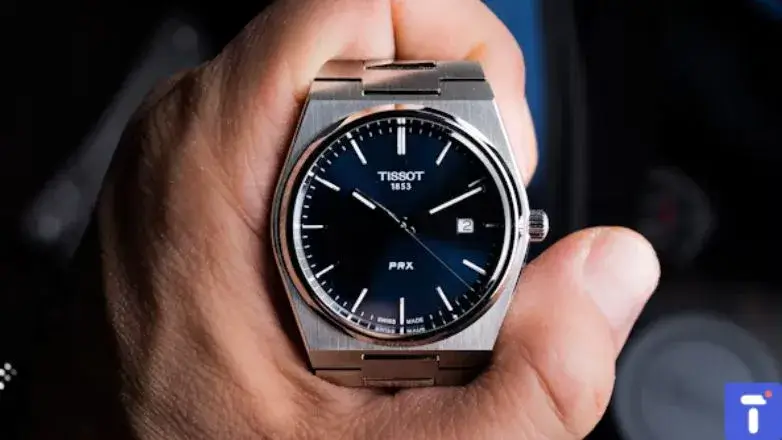
- Best starting point: Compare the PRX for an integrated-bracelet style, Gentleman for daily wear, Le Locle for a dress watch, and Seastar for a sport or dive-style watch.
Tissot History, Swiss Heritage and Swatch Group Ownership
Charles-Félicien Tissot and his son Charles-Émile founded Tissot in Le Locle, Switzerland, in 1853. The company has remained associated with Swiss watchmaking for more than 170 years. Its history includes technical milestones as well as the development of collections that now serve different budgets and styles.
- 1853: Tissot was founded in Le Locle, a historic Swiss watchmaking town.
- 1930: Tissot introduced the Antimagnetique, described by the Fondation de la Haute Horlogerie as the first antimagnetic wristwatch.
- 1983: Tissot became part of the group that is now Swatch Group.
- 1999: Tissot introduced the T-Touch, a touch-controlled watch with functions selected through its crystal.
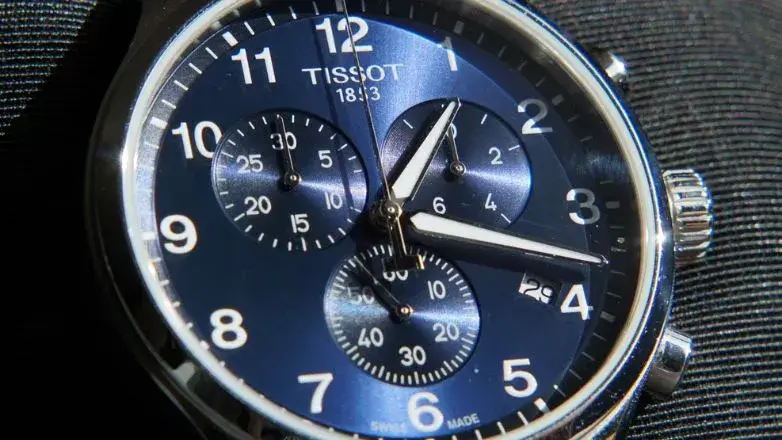
Tissot is part of Swatch Group, a large Swiss watch company whose portfolio also includes brands such as Omega, Longines, Hamilton and Swatch. Group ownership gives Tissot access to an established industrial and service structure, but it does not make every Tissot model equivalent in materials, movement or finishing to a more expensive brand in the same group.
What Does Swiss Made Mean on a Tissot Watch?
Swiss Made is a regulated origin designation, not a statement that every component in a watch was manufactured in Switzerland. Under the Swiss watch ordinance, the watch must meet specific technical, movement, assembly, inspection and Swiss-value requirements. The revised rules require at least 60% of the manufacturing costs of the complete watch to be generated in Switzerland, alongside other conditions.
This makes the Swiss Made label meaningful, but it should not be confused with a guarantee of hand-finishing, an in-house movement, or luxury-level decoration. For the legal background, see the Federation of the Swiss Watch Industry’s Swiss Made Criteria and the Fondation de la Haute Horlogerie’s Tissot History.
Tissot Watch Quality, Materials and Movements
Tissot’s quality is strongest when judged by the exact reference rather than by a blanket statement about the brand. Many current models use stainless-steel cases and sapphire crystals, while other references use different materials or crystal types. Check the specification sheet for the particular watch you are considering.
- Cases and bracelets: Stainless steel is common across the range, with selected models using titanium, ceramic or special finishes. Bracelet construction, clasp adjustment and case proportions vary by collection and price.
- Crystal: Sapphire is used on many Tissot models, but it should not be assumed for every reference. Confirm whether the watch uses sapphire or mineral glass before comparing prices.
- Movements: Tissot sells quartz, automatic, mechanical, solar and connected watches. A quartz model prioritizes convenience, while an automatic model appeals to buyers who want a mechanical movement.
- Finishing: Expect practical case and dial finishing at this price level, not the hand decoration or elaborate movement finishing associated with haute horlogerie.
Is the Powermatic 80 Movement Any Good?
Powermatic 80 is one of Tissot’s best-known automatic movement families. Selected versions offer up to 80 hours of power reserve, so a fully wound watch can continue running for roughly three days off the wrist. This is useful if you alternate between watches. The specification, regulating components and balance-spring material can vary by caliber, so check the exact model rather than assuming every Powermatic 80 is identical.
An 80-hour reserve is a practical advantage, but it does not automatically make a watch more accurate or more durable than every competitor. Accuracy also depends on regulation, the individual movement, wearing conditions and service history. For more context, see our Mechanical vs Quartz Watch Guide and How Watches Work Without Batteries.
Notable Tissot Watch Collections
Tissot’s range is broader than the PRX. These collections cover distinct use cases, although individual models within each line can have different movements, sizes and specifications.
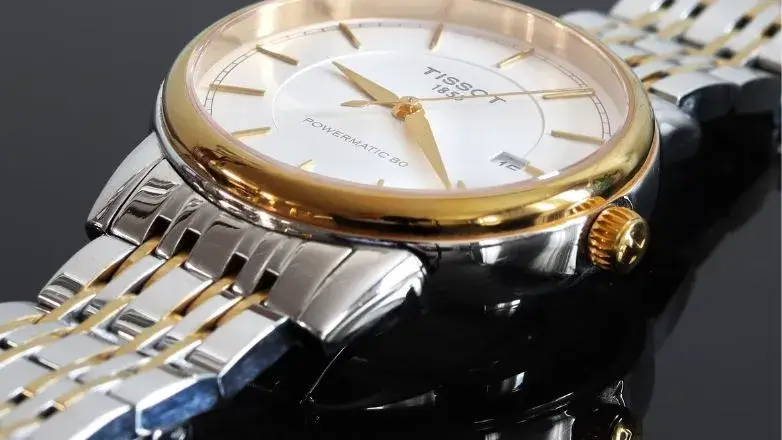
- Tissot PRX: A 1970s-inspired design with an integrated-bracelet look. The current U.S. range includes quartz and Powermatic 80 automatic versions, as well as different case sizes and special editions.
- Tissot Gentleman: A versatile everyday collection with quartz and automatic options. It is worth comparing for buyers who want a conventional bracelet watch rather than the PRX’s integrated design.
- Tissot Seastar: A sport and dive-style family with quartz and automatic models. Water resistance varies by reference, so check the rating on the exact watch.
- Tissot Le Locle: A traditional dress-watch collection with automatic models, textured dials and more formal styling.
- Other lines: PR 100, Classic Dream, Ballade, Heritage and T-Touch models broaden the choice to include simpler quartz watches, chronographs and connected or solar-powered functions.
Tissot Watch Prices in the United States
Tissot’s U.S. collection stretches across several price bands rather than fitting one fixed budget. The examples below are prices displayed on Tissot’s U.S. collection pages when checked on November 4, 2026. They are reference points, not guaranteed prices for every dial, size, special edition or retailer. Check the live product page before buying.
| Collection and Example | Movement | Displayed U.S. Price | Best Fit |
|---|---|---|---|
| PRX 40 mm | Quartz | $450 | Integrated-bracelet design and easy ownership |
| PRX 40 mm | Powermatic 80 automatic | $850 | Mechanical movement and long power reserve |
| Gentleman 40 mm | Quartz | $495 | Simple everyday timekeeping |
| Gentleman 38 mm | Automatic | $850 | Versatile everyday mechanical watch |
| Le Locle 39.3 mm | Automatic | About $715 to $895 | Traditional dress-watch styling |
| Seastar 1000 40 mm | Quartz | About $515 | Sport styling with a quartz movement |
| Seastar 1000 40 mm | Automatic | About $875 | Mechanical sport or dive-style watch |
| Seastar 2000 44 mm | Automatic | About $1,050 to $1,125 | Larger, more specialized sport watch |
The table shows why it is important to compare references rather than saying that all Tissot watches cost $350 to $800. The brand has entry-level quartz models, automatic watches around the $800 to $1,000 range, and more expensive special editions or advanced models. A discount from an authorized retailer may change the final price, but confirm that the watch includes a valid manufacturer warranty.
Tissot vs Seiko, Citizen and Hamilton
Tissot is not automatically better than a Japanese or another Swiss watch brand. These alternatives often compete for the same buyer, but they emphasize different strengths. Compare a specific reference, its size, movement, crystal, water resistance and price rather than choosing only by country of origin.
| Brand | What It Usually Offers | Consider It When |
|---|---|---|
| Tissot | Swiss Made quartz and mechanical watches, broad styling, PRX and Powermatic 80 options | You value Swiss origin, recognizable designs and an established service network |
| Seiko | Japanese quartz and mechanical watches across affordable, sport, dress and specialist lines | You want a wide range of styles and price points, or a Japanese alternative to a Tissot |
| Citizen | Strong quartz and light-powered Eco-Drive choices, alongside mechanical models | Low-maintenance solar timekeeping and practical everyday use are priorities |
| Hamilton | Swiss watches with field, pilot, dress and sport designs, also within Swatch Group | You prefer a different Swiss design language or a field and aviation-inspired watch |
For a wider brand comparison, read our Topreviewd Watch Buying Guides and explore our Fossil vs Guess Watches Comparison. Neither of those comparisons replaces checking the specification and fit of the exact Tissot and alternative models on your shortlist.
Advantages and Disadvantages of Buying a Tissot Watch
| Advantages | Limitations |
|---|---|
| Long-established Swiss watchmaker with a clear heritage | Swiss Made does not mean every component is Swiss or that the watch is hand-finished |
| Quartz, automatic, mechanical, solar and connected choices | Specifications vary substantially by reference |
| Useful automatic options, including selected Powermatic 80 models | Mechanical watches require winding and periodic service |
| Broad choice of styles and case sizes | Some designs are common and may not feel distinctive to every buyer |
| Official U.S. warranty and authorized service support | Resale value should not be treated as a guaranteed investment return |
Are Tissot Watches Worth the Money?
Tissot can be worth the money when the model’s movement, materials, design and fit match what you want at its asking price. A PRX automatic may appeal to someone who values its integrated-bracelet design and long power reserve. A Gentleman may be more versatile for daily office and casual wear. A Seastar is a more suitable starting point for someone who wants a sport or dive-style watch.
It is less compelling to buy a Tissot simply because it says Swiss Made, because the brand is old, or because you expect it to appreciate in value. Compare the exact reference against Seiko, Citizen and Hamilton models at a similar price. A better fit, more useful movement or clearer warranty can matter more than the logo.
Tissot Water Resistance: What the Ratings Actually Mean
Water resistance is model-specific. A Tissot with a 3 bar rating is not a swimming watch, and the depth printed on a dial or case back should not be read as a promise that you can dive to that depth. Tissot’s U.S. guidance gives the following practical uses for its ratings:
| Marked Rating | Tissot’s Stated Suitability |
|---|---|
| 3 bar / 30 m | Hand washing |
| 5 bar / 50 m | Hand washing and bathing |
| 10 bar / 100 m | Showering and swimming |
| 20 bar / 200 m or 30 bar / 300 m | Snorkelling and scuba diving |
| 60 bar / 600 m | Professional diving when the watch also meets the relevant diver’s-watch standard |
These are Tissot’s published usage guidelines. Always check the exact model’s manual and case-back rating. Water resistance can deteriorate as seals age, and Tissot recommends an annual water-resistance check by an authorized service partner. Do not operate crowns or pushers underwater unless the model’s instructions specifically allow it. Read the Tissot U.S. Water Resistance Guidance before using a watch in water.
Tissot Warranty, Servicing and Authenticity
How Long Is the Tissot Warranty?
Tissot’s U.S. customer-service information states that most watches have a two-year international warranty. Models with Lightmaster solar technology and COSC-certified models receive an additional year, for a total of three years. The warranty covers qualifying material and manufacturing defects, subject to the official terms. It does not cover ordinary wear, accidental damage or every battery-related issue, and unauthorized work can affect warranty coverage. Keep proof of purchase and confirm that the digital warranty has been activated by an official retailer.
Read the current Tissot U.S. Warranty Terms before purchasing, particularly when buying from a marketplace or a seller outside Tissot’s authorized network.
How Often Should a Tissot Watch Be Serviced?
Tissot’s general recommendation is to have a watch serviced every four to five years by an authorized service centre. The correct interval depends on the model, climate, use and condition. Mechanical watches need movement maintenance, while quartz watches may need battery and gasket service. Water resistance should be checked annually if you rely on it.
Service costs depend on the reference and the work required. A complete service can involve movement disassembly, cleaning, lubrication, replacement of worn parts and restoration of water resistance. Review the Tissot U.S. Service Price and Maintenance Information and use an authorized service centre for work covered by the manufacturer’s warranty.
How Can You Check Whether a Tissot Watch Is Genuine?
Buy from a Tissot boutique, the official Tissot online store or a retailer listed in Tissot’s store locator. Tissot uses a Watch-Secure identification number on eligible watches and provides a registration process for warranty and product information. Registration by itself is not a complete authenticity certificate, especially for a second-hand watch. If the number is not recognized, the seller cannot provide a valid purchase record, or the price looks unusually low, contact Tissot or an authorized service centre for guidance before buying.
Use Tissot’s official Authenticity and Watch Registration FAQ and Authorized Store Locator. Avoid relying on packaging, a serial number photo or a seller’s claim alone.
Tissot Buying Checklist for U.S. Shoppers
Before you order, compare the exact reference number and work through this checklist. It can prevent common mistakes when two watches look similar but have different specifications.
- Choose the movement: Quartz is usually simpler to own; automatic is for buyers who enjoy a mechanical movement and winding routine; solar or connected models have their own charging and software considerations.
- Check the dimensions: Compare case diameter, thickness and lug-to-lug length with a watch you already find comfortable. Integrated bracelets can wear differently from conventional lugs.
- Confirm the crystal and case material: Do not assume every model has sapphire or the same grade of steel. Read the reference-specific product specifications.
- Match water resistance to your routine: Choose the rating for the way you intend to use the watch, and follow the manual’s limits.
- Calculate ownership cost: Consider servicing, battery changes for quartz models, strap or bracelet adjustments and the availability of compatible replacement straps.
- Verify the seller and warranty: Use an authorized retailer and check that the manufacturer warranty is valid and activated.
- Compare the final price: Look at the exact reference from Tissot and at least one alternative from Seiko, Citizen or Hamilton before deciding.
Conclusion: Should You Buy a Tissot Watch?
Tissot is a good choice if you want an established Swiss watch brand, a useful mix of quartz and mechanical movements, and a broad range of styles at accessible Swiss-watch prices. The PRX, Gentleman, Le Locle and Seastar each serve a different purpose, so begin with the design and features you will actually use.
It is not the automatic best choice for every budget. Seiko may offer a wider range of Japanese watches, Citizen is worth considering for Eco-Drive convenience, and Hamilton provides another Swiss alternative. Compare the exact models, check the current U.S. prices, and factor in fit, servicing and warranty rather than buying on brand reputation alone.
For more watch education and comparisons, visit the Topreviewd Home Page, read our Mechanical vs Quartz Watch Guide, and explore Our Armani Exchange Watches Review.
Frequently Asked Questions About Tissot Watches
Is Tissot considered a luxury watch brand?
Tissot is generally positioned as an accessible or entry-level Swiss watch brand rather than a high-luxury maison. It offers Swiss Made watches at prices below brands such as Omega and Longines, but it does not compete on exclusivity or hand-finishing with the highest tiers of Swiss watchmaking.
Are Tissot watches durable?
Many Tissot watches are suitable for regular use when worn and maintained as intended. Durability depends on the case, crystal, movement, water-resistance rating and how the watch is treated. Check the exact reference because not every model has sapphire crystal or the same water resistance.
Is Tissot better than Seiko?
Neither brand is universally better. Tissot is a strong option if you specifically want a Swiss Made watch, while Seiko offers a large selection of Japanese quartz and mechanical watches across many price points. Compare the exact models for movement, crystal, dimensions, water resistance, bracelet quality and price.
Are Tissot watches worth the money?
They can be, especially when the movement, materials, design and fit justify the asking price. The PRX, Gentleman, Le Locle and Seastar serve different needs, so compare the individual reference and its alternatives before buying. A Tissot is not automatically a better value simply because it is Swiss Made.
Where should I buy a Tissot watch in the United States?
Buy from Tissot’s U.S. online boutique, a Tissot boutique or a retailer listed in the official store locator. An authorized seller helps ensure that the watch is genuine and carries a valid manufacturer warranty. Be cautious with unusually low prices and sellers who cannot provide a dated receipt or warranty details.
Is the Tissot PRX Powermatic 80 worth buying?
The PRX Powermatic 80 is worth considering if you like its integrated-bracelet design, want an automatic Swiss watch and value the movement’s power reserve. Try it on before buying because its case shape and bracelet fit are not ideal for every wrist. Compare the quartz PRX as well if convenience and lower cost matter more than a mechanical movement.
Is Tissot a good first Swiss watch?
Yes. Tissot offers quartz models that are straightforward to own and automatic models for buyers who want to learn about mechanical watches. A first-time buyer should prioritize a comfortable case size, a movement that suits their routine, a clear warranty and a price they can comfortably afford.
Does Tissot make smartwatches?
Tissot offers connected watches such as T-Touch Connect models, including solar-powered variants. They combine traditional watch functions with selected connected features, but they are not direct replacements for full-featured smartwatch platforms. Check the current model’s app compatibility, supported functions and battery or charging requirements before buying.
Do Tissot watches hold their value?
Resale value varies by model, condition, completeness, demand and the price originally paid. Some popular references may attract more interest than less common models, but Tissot should not be treated as an investment or bought with an expectation of appreciation. Compare completed sales for the exact reference rather than relying only on asking prices.
Are all Tissot watches Swiss Made?
Tissot’s watches are sold as Swiss Made timepieces, but the label has a specific legal meaning. It requires a Swiss movement, casing-up and final inspection in Switzerland, technical-development conditions, and at least 60% of the complete watch’s manufacturing costs to be generated in Switzerland. It does not mean every component is made there.
How often should a Tissot watch be serviced?
Tissot gives a general service recommendation of every four to five years through an authorized service centre. The actual interval depends on model, use, climate and condition. Its U.S. FAQ also recommends annual water-resistance checks by an authorized partner if you depend on the watch’s water protection.
Are Tissot watches good for everyday wear?
Many are designed for regular use, especially the Gentleman, PRX and selected PR 100 models. Choose a case size and thickness that feel comfortable, and match the water-resistance rating to your routine. A dress watch with a leather strap may need more care around moisture than a steel sport watch.
What types of watches does Tissot make?
Tissot makes quartz, automatic and mechanical watches, along with solar-powered and connected models. Its collections include dress, everyday, sport, dive-style, chronograph, heritage and pocket-watch designs. The best range to explore depends on whether you want a simple daily watch, a mechanical movement or additional functions.
Is Tissot a reliable and reputable watch brand?
Tissot is an established Swiss watchmaker with a long operating history, a broad international retail network and published warranty and service support. Reliability still depends on the specific movement, condition, use and maintenance. No brand name removes the need to check the watch’s specifications and care instructions.
What warranty comes with a Tissot watch?
Most Tissot watches have a two-year international warranty. Tissot states that Lightmaster solar models and COSC-certified models receive a three-year warranty. Coverage is subject to the official terms and a valid activated warranty, so check the details for your exact purchase.
Can you swim with a Tissot watch?
Only use a Tissot watch for swimming when its exact rating and manual permit it. Tissot’s U.S. guidance lists 10 bar / 100 m as suitable for showering and swimming, and 20 or 30 bar for snorkelling and scuba diving. Have the water resistance checked regularly and do not assume every model in the same collection has the same rating.
Editorial Note
This is an independent informational review intended to help U.S. buyers understand Tissot’s position, collections and ownership considerations. It is not a laboratory durability test or a hands-on review of every model. Product features and prices can change, and a specification that applies to one reference should not be applied to the entire collection.
Trusted Sources
- Tissot U.S. History, for the company’s heritage and history from Le Locle.
- Tissot U.S. PRX Collection, for current U.S. models and displayed prices.
- Tissot U.S. Seastar Collection, for current model variants and prices.
- Tissot U.S. Frequently Asked Questions, for water resistance, warranty, authenticity and servicing guidance.
- Tissot U.S. Warranty Terms, for warranty coverage and exclusions.
- Tissot U.S. Service and Maintenance Information, for service categories and costs.
- Federation of the Swiss Watch Industry: Swiss Made Criteria, for the regulated origin designation.
- Fondation de la Haute Horlogerie: Tissot, for historical milestones.
How This Guide Is Researched and Kept Current
This guide was reviewed on November 4, 2026. Collection names and U.S. price examples were checked against Tissot’s official U.S. product pages. Brand history, Swiss Made criteria, warranty terms, water-resistance guidance and service recommendations were cross-checked against Tissot, the Federation of the Swiss Watch Industry and the Fondation de la Haute Horlogerie.
Prices are snapshots from the date of review and may change by model, size, material, retailer or promotion. Specifications are reference-specific. The article does not claim first-hand testing of every watch; it distinguishes published manufacturer specifications from editorial assessment. Readers can report an error or request a correction through the Topreviewd Contact Us Page.
About the Author
Abdul Khader is a watch enthusiast, researcher and writer, and the person behind Topreviewd. He writes about luxury and designer watches, automatic and quartz movements, materials, sizing, straps, crystals and water resistance, comparing watches across different price points so readers can judge what they get for the money. His approach is practical. He checks specifications, points out when sources disagree, and keeps published details separate from his own opinion. Read more on the About Page, or reach him through the Contact Us Page.