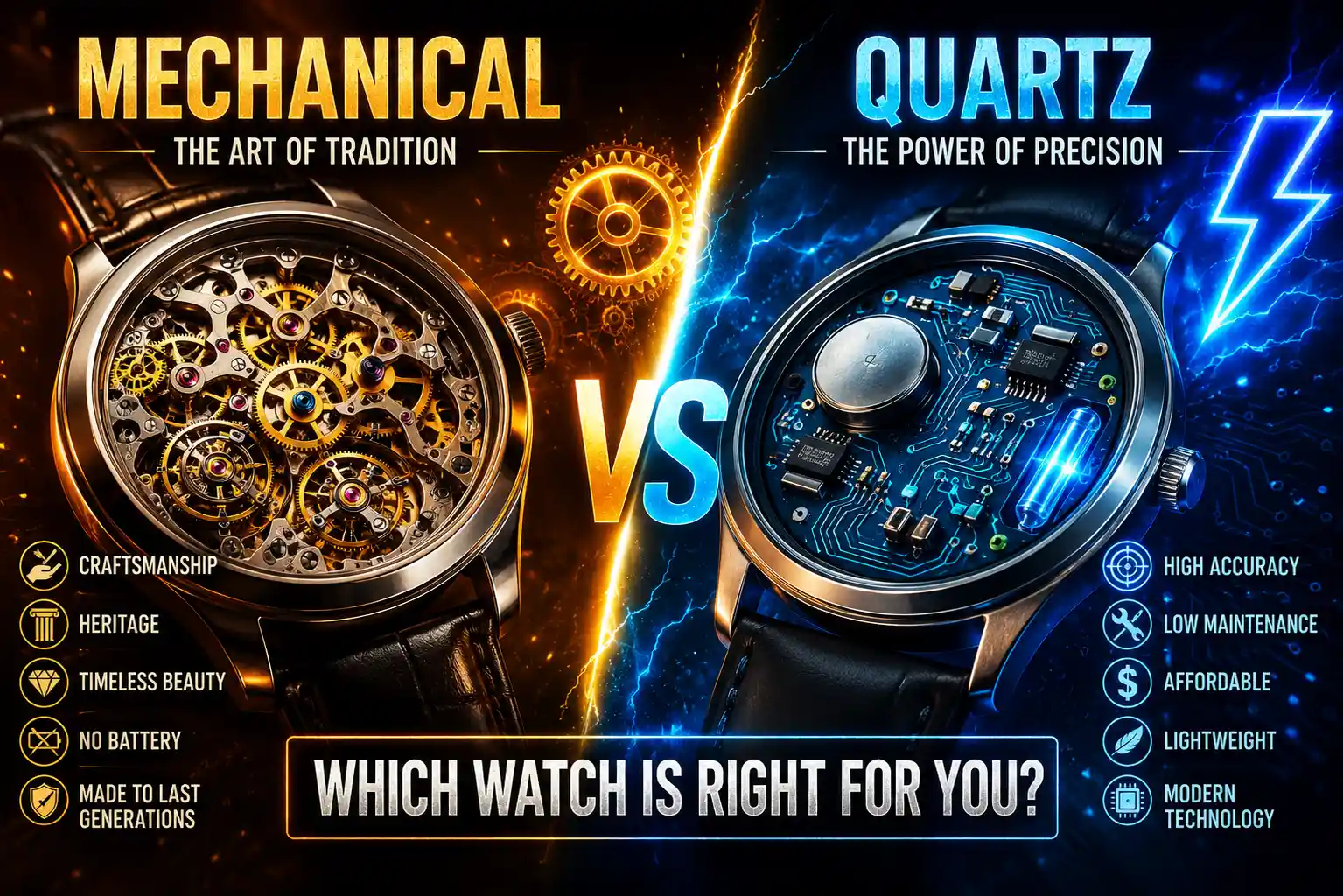
Standing in front of a watch counter, you’ll eventually hit the same wall every buyer hits. One case says “automatic movement.” Another says “quartz.” Both look sharp. Both tell time. Yet the price tags, and the opinions of everyone around you, pull in different directions. This is the mechanical vs quartz watch debate, and it trips up beginners and seasoned buyers alike.
Ask five collectors whether a quartz watch vs mechanical pick is the smarter buy, and you’ll get five different answers, usually delivered with strong conviction.
The truth is simpler than the arguments suggest. Neither movement is objectively better, so mechanical vs quartz watch which is better isn’t really the right question to start with. They’re built for different priorities, and once you understand how each one works, the quartz vs mechanical watch choice becomes a lot easier to make on your own terms.
This guide walks through both movements in plain language, with each watch movement explained the way you’d want a knowledgeable friend to explain it: how they work, where they shine, where they fall short, and who each one actually suits. If you’ve been asking yourself Should I buy a mechanical or quartz watch, side by side before a purchase, you should come away able to choose between a mechanical watch vs quartz option, or a quartz or mechanical watch pick for a specific occasion, without needing anyone else’s opinion.
How We Compared These Watch Technologies
This comparison goes beyond technical specifications to evaluate how each watch technology performs in everyday ownership. I assessed accuracy, maintenance requirements, durability, convenience, servicing needs, power source, long-term reliability, operating costs, and suitability for different lifestyles.
Rather than focusing only on manufacturer claims, this guide explains the practical advantages and limitations of each technology so buyers can choose the option that best matches their needs.
What Is a Mechanical Watch?
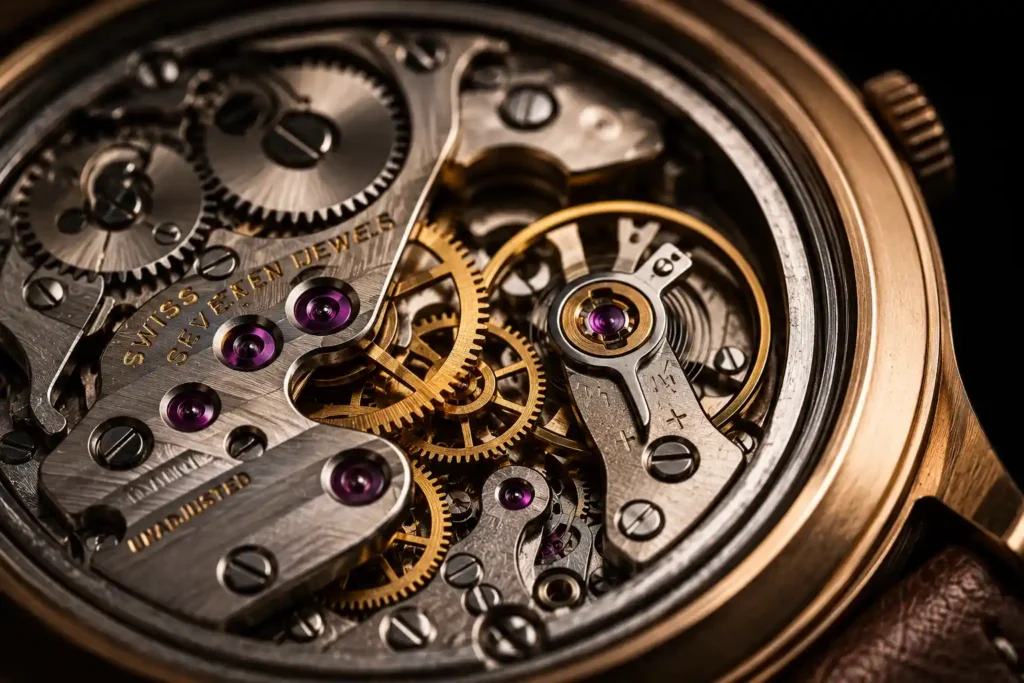
A mechanical watch runs entirely on physical energy stored in a coiled spring, not a battery. Wind the crown, and you tighten the mainspring, which slowly releases tension through a gear train to keep the hands moving.
There are two main types of mechanical watches: manual and automatic. A manual, or hand-wound watch, sometimes called a manual wind watch, needs winding by hand every day or two. An automatic watch winds itself using a rotor that spins with the natural motion of your wrist. This is really what the automatic vs mechanical watch question comes down to: automatics are mechanical watches too, just self-winding ones rather than hand-wound ones.
Inside, the movement relies on a few core parts working together:
- Mainspring – stores the energy you put in by winding.
- Gear train – transfers that energy toward the escapement.
- Escapement – releases energy in small, controlled bursts, which is what creates the ticking motion.
- Balance wheel – oscillates back and forth, acting as the timekeeping regulator.
- Jewel bearings – tiny synthetic rubies that reduce friction at key contact points, extending the movement’s life.
- Power reserve – how long the watch keeps running after a full wind, often between 38 and 80 hours in modern pieces.
Because there’s no battery involved, mechanical watches don’t need batteries at all. This is one of the most searched questions among new buyers, and the answer is simple: the mainspring does the job a battery would do elsewhere.
Real-world examples help make this concrete. A Seiko 5 automatic, a Tissot PRX Powermatic, or an Orient Bambino all run on mechanical calibers you can watch tick away through a display caseback. Each second hand moves in a small sweeping motion rather than a sharp jump, since the balance wheel oscillates several times per second. That visible motion is a big part of the watch craftsmanship people are drawn to when they choose mechanical over quartz.
What Is a Quartz Watch?
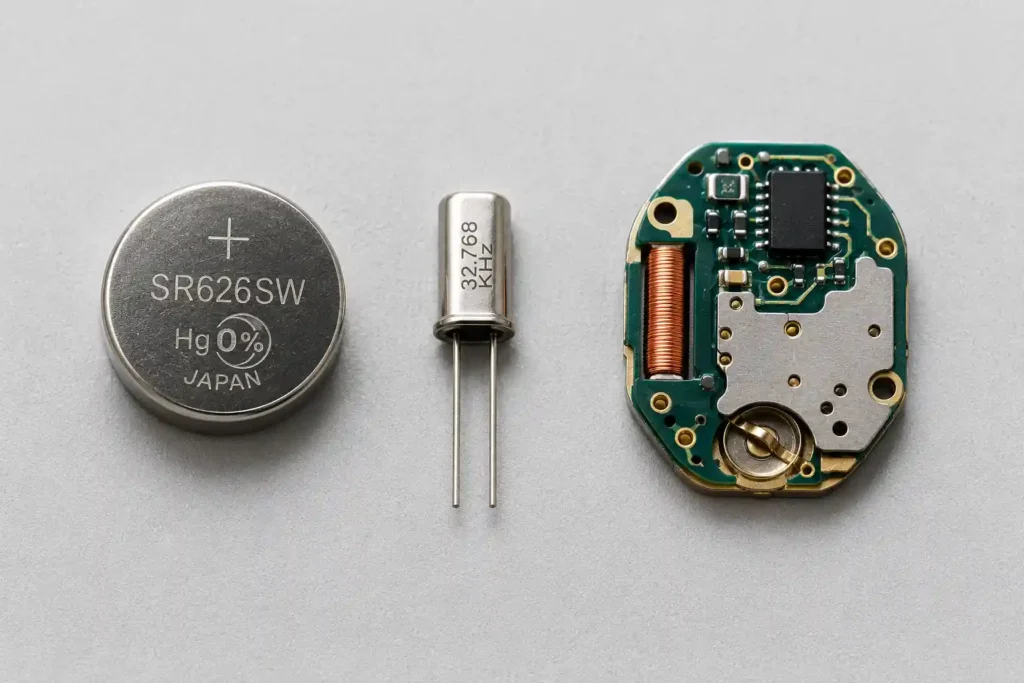
A quartz watch works on a completely different principle. As a battery-powered movement, it sends electrical current through a tiny quartz crystal, causing it to vibrate at a precise, fixed frequency, usually 32,768 times per second.
A circuit inside the watch counts those vibrations and converts them into regular electrical pulses. Those pulses drive a step motor, which turns the gears that move the hands. This is why a quartz second hand ticks once per second in a distinct, sharp motion instead of sweeping.
Quartz watch accuracy comes down to the reliability of that crystal oscillation inside the quartz watch movement. Because quartz crystals vibrate at such a consistent rate, quartz watches are inherently more accurate than mechanical ones, typically drifting only a few seconds per month, which is what most people actually mean by precision timekeeping.
Battery life varies by model, but most quartz watches run for one to three years before the battery needs replacing. Solar-powered quartz watches, like Citizen’s Eco-Drive line, remove even that step by converting light into stored energy. Kinetic watches, a Seiko innovation, generate charge from wrist motion and store it in a capacitor instead of a traditional battery.
Mechanical vs Quartz Watch: Quick Comparison Table
| Factor | Mechanical Watch | Quartz Watch |
|---|---|---|
| Accuracy | Roughly -20 to +40 seconds per day (COSC-certified models tighter) | Roughly +/- 15 seconds per month |
| Maintenance | Servicing every 3-5 years | Battery change every 1-3 years |
| Lifespan | Decades, often generational with servicing | Long-lasting, but circuit components eventually wear |
| Battery | None needed | Required (unless solar or kinetic) |
| Price | Generally higher, especially Swiss movements | Generally more affordable |
| Durability | Sensitive to shocks and magnetism | More resistant to shocks and impact |
| Craftsmanship | High, often hand-finished | Functional, less artisanal |
| Servicing | Specialist required, higher cost | Simple battery swap, low cost |
| Luxury appeal | Strong, tied to heritage brands | Present but less traditional |
| Everyday use | Good, with some care | Excellent, low-maintenance |
| Collectability | High, especially vintage and limited pieces | Lower, with some exceptions |
| Repairability | Extensive, parts often serviceable for decades | Limited once circuit boards fail |
| Resale value | Can hold or increase, especially Swiss models | Generally depreciates faster |
| Water resistance | Varies by model and seals | Varies by model and seals |
| Power reserve | Defined reserve, needs winding or wear | Not applicable, runs on battery power |
How Mechanical Watches Work
Think of a mechanical watch like a wound-up toy car, except instead of releasing all its energy in one burst, it’s engineered to release that energy in tiny, metered doses over hours.
When you wind the crown, you coil the mainspring tighter. That spring wants to unwind, and its stored tension pushes through a series of gears, the gear train, which steps that energy down to a manageable pace.
Here’s where the escapement comes in. It acts like a gatekeeper, releasing a small amount of energy to the balance wheel at fixed intervals, then locking again. The balance wheel swings back and forth in response, and each swing corresponds to a tick you can both hear and see.
That back-and-forth motion is the actual timekeeping heartbeat of the watch. A faster balance wheel frequency, measured in vibrations per hour, generally means smoother second-hand movement and, often, tighter watch movement accuracy.
Automatic movements add one more piece: a semicircular rotor that spins freely inside the case. As you move your wrist through the day, the rotor spins and winds the mainspring automatically, so you rarely need to wind it by hand.
How Quartz Watches Work
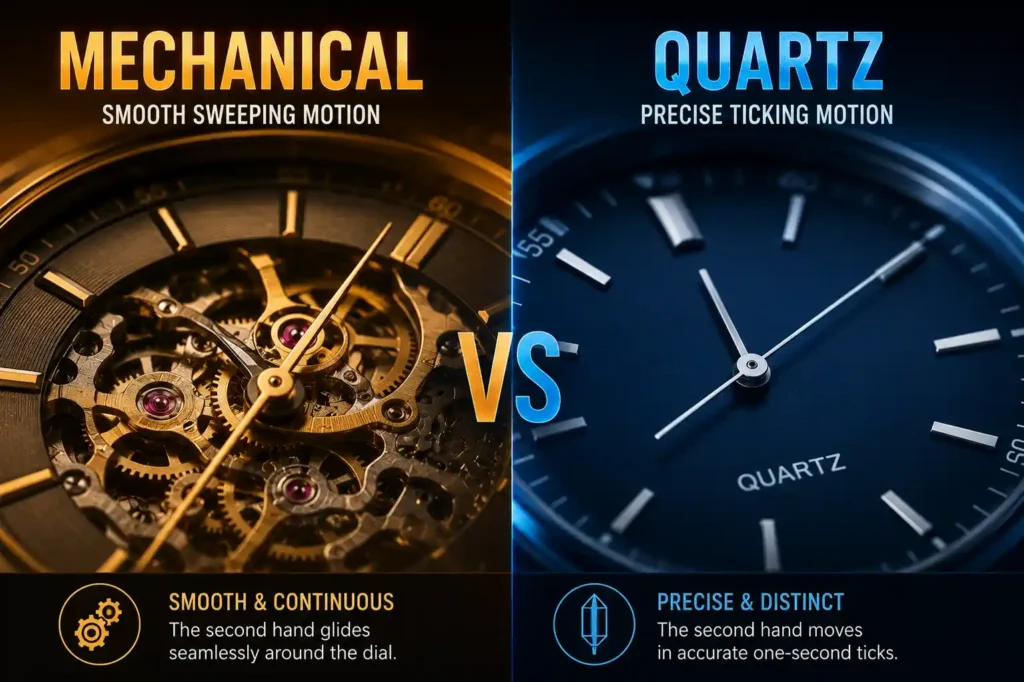
Quartz watches trade mechanical complexity for electronic precision. A battery supplies steady voltage to a small quartz crystal shaped like a tuning fork.
When electricity passes through it, the crystal vibrates at a fixed, predictable frequency thanks to the piezoelectric properties of quartz. That vibration rate barely changes with temperature or handling, which is exactly why quartz timekeeping stays so consistent.
An integrated circuit counts those vibrations and divides them down into one pulse per second. That pulse triggers a tiny step motor, which advances a gear train connected to the hands.
The overall system is simpler than a mechanical movement, with fewer moving mechanical parts and no need for winding. It’s also why quartz production costs less, which trickles down to the price you pay at checkout.
Mechanical vs Quartz Watch Accuracy
Mechanical watch accuracy depends on the quality of the watch caliber inside it. Entry-level mechanical calibers might drift 20 to 40 seconds a day, while COSC-certified chronometers, tested against strict standards set by the Contrôle Officiel Suisse des Chronomètres, are required to stay within -4 to +6 seconds daily.
If pure precision is your priority, quartz wins outright. A standard quartz movement typically stays within 15 to 20 seconds a month, which is difficult for any mechanical caliber to match.
Temperature swings and magnetism affect mechanical movements more noticeably than quartz ones. A magnetized balance spring can throw off timekeeping significantly until demagnetized, something quartz owners never have to think about.
In my experience wearing both regularly, the accuracy gap matters less day to day than people expect. You adjust a mechanical watch every week or so, and it becomes routine rather than a burden. But if you need dependable, set-it-and-forget-it precision, quartz is the more realistic choice.
Mechanical vs Quartz Watch Lifespan
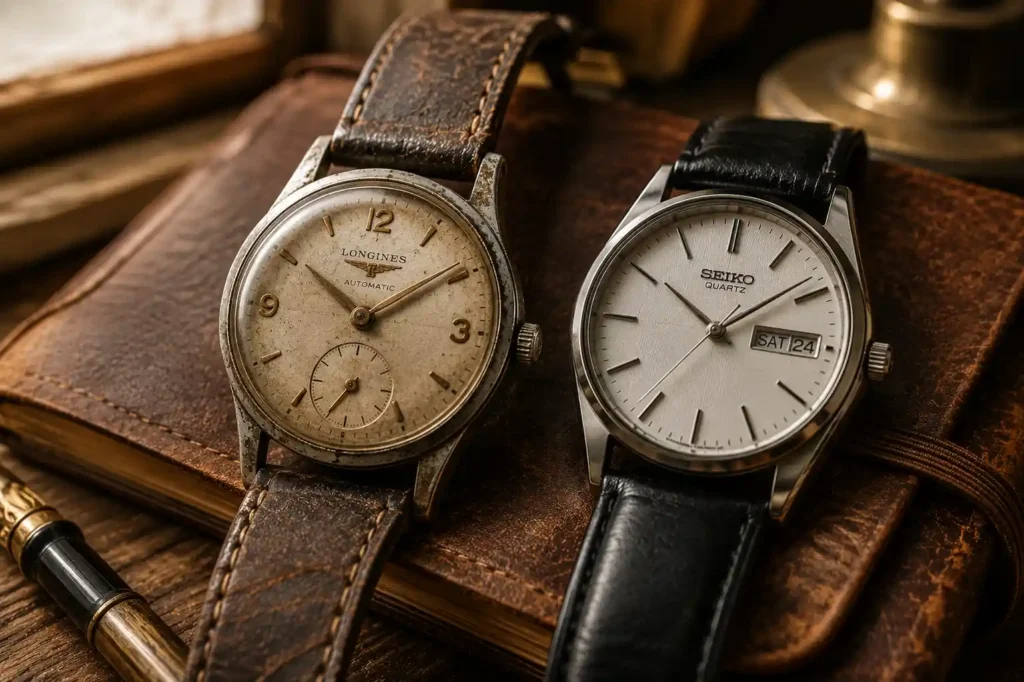
Mechanical watch lifespan can stretch across generations when the piece is serviced properly. Vintage mechanical watches from the 1950s and 1960s still run today, often after a cleaning and lubrication.
Quartz watch lifespan is long too, but the wear pattern is different. The mechanical parts, gears, and motor tend to outlast the battery and circuit board, though eventually electronic components can fail in ways that are harder to repair than a worn gear.
Service intervals differ sharply. Mechanical movements typically need professional servicing every three to five years to keep lubrication fresh and prevent wear. Quartz watches just need a battery replacement every one to three years, a job that takes minutes at most jewelers.
Reliability, in the day-to-day sense, tends to favor quartz. There’s less that can go wrong mechanically, and no winding routine to maintain. But for a piece meant to be handed down, a well-built mechanical watch is designed with that kind of longevity in mind.
Mechanical vs Quartz Watch Maintenance
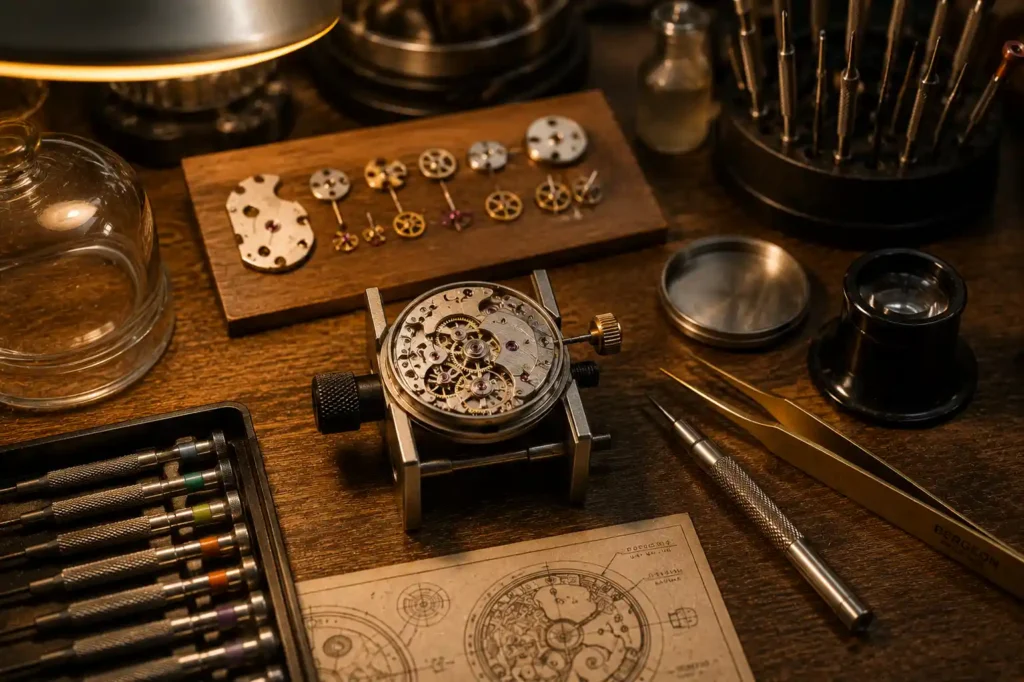
Watch servicing for a mechanical piece involves disassembling the movement, cleaning each component, replacing worn parts, re-lubricating, and reassembling with precision. It’s a skilled job, and costs vary by brand and movement complexity, often running from $150 to $500 or more for luxury calibers.
Quartz watch maintenance, by comparison, is almost entirely reactive. Replace the battery when it dies, check the gaskets occasionally if water resistance matters to you, and that’s usually the extent of it.
This is one of the clearest quality-of-life differences between the two. If you don’t want to think about your watch beyond wearing it, quartz removes nearly all the friction. If you enjoy the ritual of winding, or don’t mind occasional servicing, mechanical ownership becomes part of the appeal rather than a chore.
Mechanical vs Quartz Watch Durability

Neither movement type is inherently fragile, but they respond to stress differently. Mechanical watches contain more delicate moving parts, so hard shocks, like a fall onto concrete, can knock a balance wheel out of alignment or damage the escapement.
Quartz movements handle shocks and rough conditions better, since fewer mechanical parts can be jarred out of position. This is part of why quartz and digital watches dominate sports, diving, and military use cases.
For travel, outdoor activities, or physically demanding jobs, quartz durability tends to offer more peace of mind. For controlled, everyday environments like an office, a mechanical watch’s durability is rarely an issue.
Mechanical Watch vs Quartz Battery Life
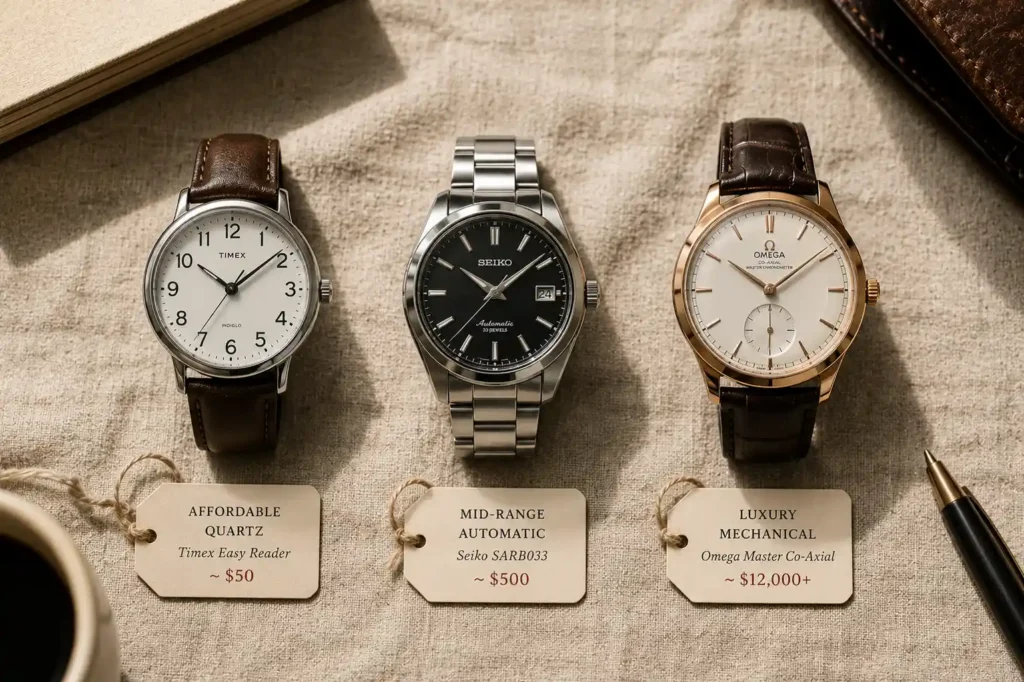
This comparison usually stops people in their tracks, because it exposes a real misunderstanding. Mechanical watches don’t have batteries, so there’s no battery life to speak of at all. Instead, why mechanical watches don’t need batteries comes down entirely to the mainspring and, for automatics, the wearer’s own motion keeping that spring wound.
Quartz battery life typically runs one to three years per battery, depending on the movement and features like chronograph functions, which drain power faster. Solar quartz watches sidestep this by recharging from light exposure, while kinetic models generate power from wrist movement and store it electronically.
If avoiding battery changes entirely appeals to you, mechanical, solar, or kinetic options all solve that problem in different ways. Standard quartz remains the simplest overall, just with an occasional battery swap built into ownership.
Mechanical Watch vs Quartz Price Difference
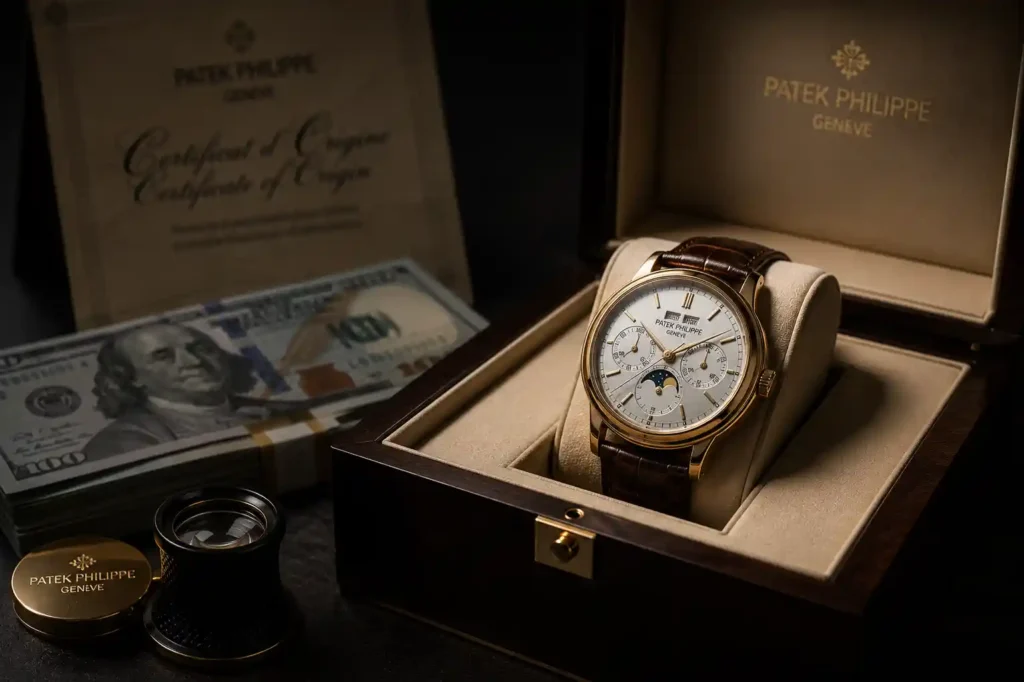
Luxury mechanical watches cost more largely because of labor. Swiss movement production, especially from established manufacturers, involves hand-finishing, in-house parts, and rigorous testing that quartz production simply doesn’t require.
A Swiss mechanical watch from a heritage brand can run from a few hundred dollars to well into five figures, depending on complications and finishing. Japanese movement watches from brands like Seiko and Citizen offer a more accessible entry point into mechanical ownership, often between $150 and $600 for solid, dependable calibers.
Quartz watches offer better value in pure dollars-per-accuracy terms. A $50 quartz watch will likely outperform a $500 mechanical one in raw timekeeping precision. What you’re paying extra for with mechanical watches isn’t performance; it’s engineering, tradition, and craftsmanship.
Mechanical Watch vs Quartz for Everyday Use

Different lifestyles pull toward different movements.
- Office workers often prefer the polish and craftsmanship of a mechanical watch as a subtle style statement.
- Travelers tend to favor quartz for its accuracy and lower maintenance across time zones and climates.
- Students usually lean toward quartz for affordability and durability during busy, unpredictable days.
- Professionals in client-facing roles sometimes choose mechanical watches for the perceived craftsmanship it signals.
- Watch collectors are drawn to mechanical pieces almost by definition, since the mechanism itself is part of the appeal.
- Outdoor enthusiasts generally trust quartz or digital movements for shock resistance and reliability in rough conditions.
There’s no universal right answer here. It comes down to how much you value the experience of winding and adjusting a piece versus wanting something that simply works without a second thought.
Pros and Cons
Mechanical Watches
Pros
- No battery required, powered entirely by winding
- Strong craftsmanship and heritage appeal
- Smooth sweeping second hand
- Higher collectability and resale potential for respected brands
- Long-term repairability with proper servicing
Cons
- Less accurate day-to-day than quartz
- Requires regular servicing, which adds cost over time
- More sensitive to shocks and magnetism
- Generally higher upfront price
- Needs occasional winding or consistent wrist motion
Quartz Watches
Pros
- Highly accurate with minimal daily drift
- Low maintenance, mostly just battery changes
- More affordable across most price tiers
- Better shock and impact resistance
- Reliable for travel and daily wear
Cons
- Requires battery replacement
- Generally lower collectability
- Less mechanical craftsmanship on display
- Ticking second hand instead of a smooth sweep
- Circuit components can eventually become harder to repair
Are Mechanical Watches Worth Buying?
If you value craftsmanship, heritage, and the feeling of wearing something engineered by hand, yes, mechanical watches are worth buying. There’s a certain satisfaction in watching a balance wheel oscillate through a display caseback that a quartz movement simply can’t replicate.
Collectability plays a role too. Vintage and limited-edition mechanical watches often hold or increase in value, particularly from respected manufacturers. That’s rarely true of quartz pieces, aside from a handful of iconic models.
The emotional value matters as much as the mechanical one. A mechanical watch passed down from a parent, or bought to mark a milestone, carries meaning that goes beyond timekeeping. If you’ve worn both regularly, you’ll notice how differently each one makes you feel, not just how differently each one performs.
Are Quartz Watches Worth Buying?
Quartz watches are absolutely worth buying if convenience and accuracy matter more to you than tradition. You get dependable, low-maintenance timekeeping without thinking about winding, servicing costs, or magnetism.
Budget-friendliness is a real strength here. Reliable quartz watches from Casio, Timex, or Seiko’s quartz lines start well under $100 and still perform accurately for years.
For most people who just need a watch that works, and works well, quartz answers that need directly without asking for much in return.
Which Watch Should You Buy?
- Beginner: Start with an affordable quartz watch or an entry-level mechanical like a Seiko 5 to learn what you actually prefer.
- Enthusiast: A mechanical watch with an exhibition caseback lets you appreciate the movement itself.
- Collector: Mechanical, ideally from respected Swiss or Japanese manufacturers with strong resale history.
- Luxury buyer: Swiss mechanical watches remain the standard for prestige and craftsmanship.
- Budget buyer: Quartz delivers the most reliable performance per dollar spent.
- Frequent traveler: Quartz, for its accuracy and lower fuss across time zones.
- Daily wearer: Either works, but quartz reduces the maintenance you’ll need to think about.
Best Mechanical Watches
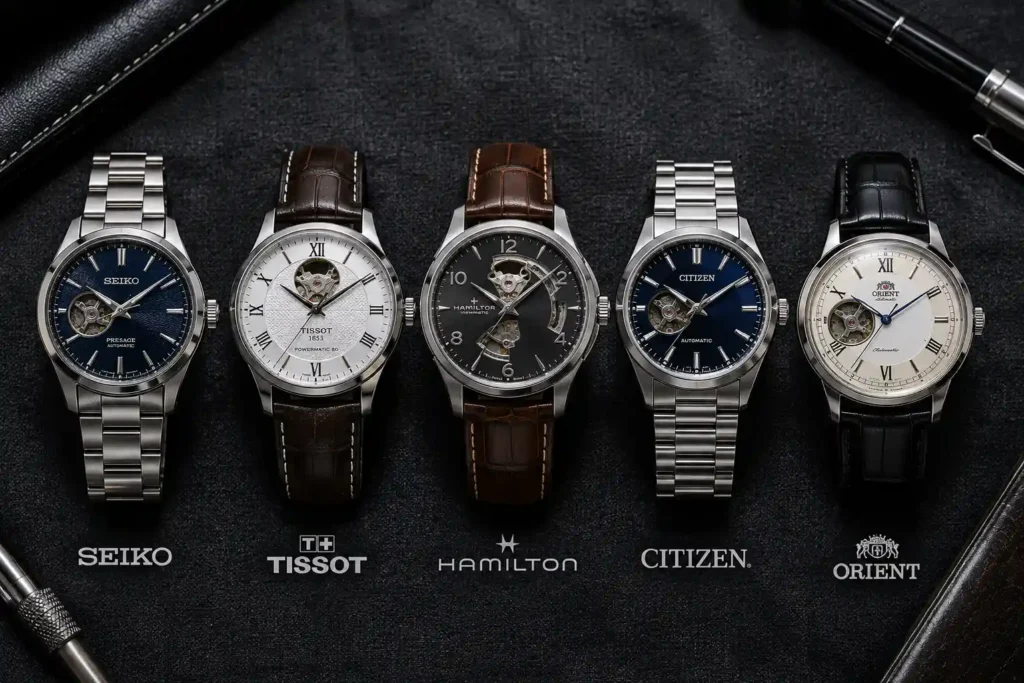
- Seiko – The Seiko 5 series remains one of the most dependable entry points into mechanical watches, suited to beginners and enthusiasts alike.
- Tissot – The PRX Powermatic blends Swiss movement quality with a design that works for both casual and formal settings.
- Hamilton – Known for reliable in-house-adjacent movements with a strong balance of price and craftsmanship, good for enthusiasts stepping up from entry-level pieces.
- Citizen (Mechanical Series) – Citizen’s mechanical offerings suit buyers who want Japanese engineering with distinct, often bold design choices.
- Orient – The Bambino line is a favorite among beginners for its classic dress-watch styling at an accessible price.
Best Quartz Watches
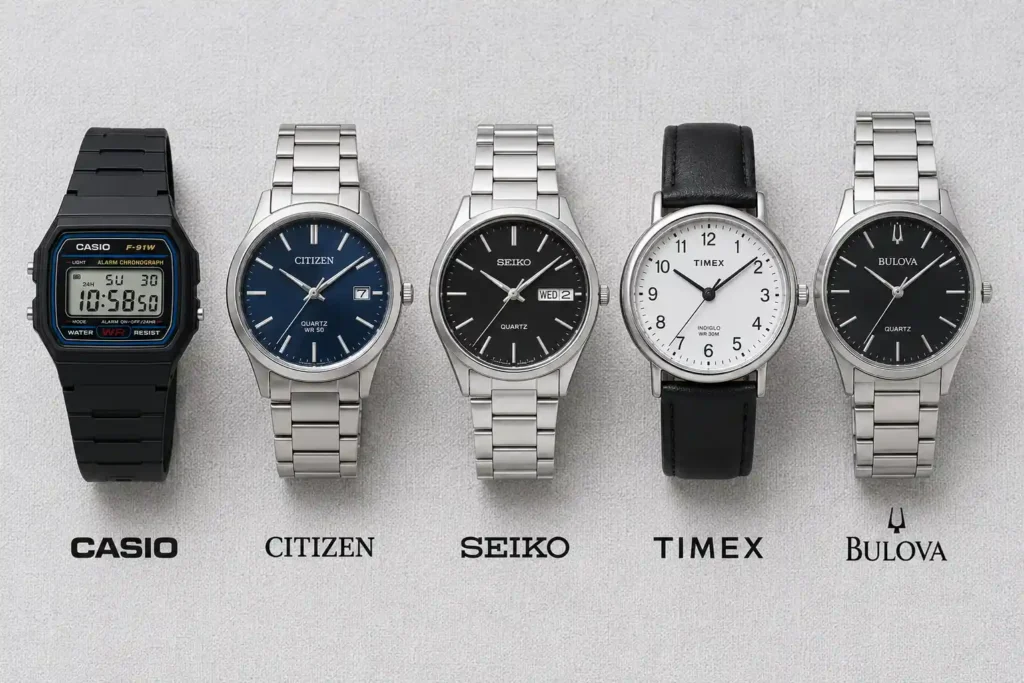
These everyday watches balance dependable accuracy with affordability, which is exactly what most quartz buyers are looking for.
- Casio – Reliable, affordable, and famously durable, ideal for students and budget buyers.
- Citizen Eco-Drive – Solar-powered quartz that removes battery replacement almost entirely, great for travelers.
- Seiko Quartz – Combines Seiko’s manufacturing reputation with the low-maintenance appeal of quartz movements.
- Timex – A dependable everyday option with classic styling and accessible pricing.
- Bulova – Known for high-frequency quartz movements that push accuracy even further for enthusiasts who want precision without a mechanical price tag.
Common Myths About Mechanical and Quartz Watches
Myth: Mechanical watches are always more accurate. Not true. Quartz movements are inherently more precise on a day-to-day basis due to the consistency of crystal oscillation.
Myth: Quartz watches are cheap. Some are budget-friendly, but high-frequency and solar quartz movements from respected brands can be just as refined and, in some cases, priced similarly to entry mechanical pieces.
Myth: Mechanical watches last forever without servicing. They can last for generations, but only with periodic servicing. Skipping maintenance leads to wear that shortens the movement’s usable life.
Myth: Quartz watches cannot be luxury watches. Several respected brands, including some higher-end Swiss houses, have produced quartz movements finished and priced at a luxury level, even if mechanical pieces dominate that segment overall.
Expert Buying Tips
Set a realistic budget before comparing models. Under $200 generally means reliable quartz or entry Japanese mechanical options. Between $200 and $800 opens up respected mechanical brands like Tissot, Hamilton, and higher-tier Seiko and Citizen pieces. Above $1,000 moves into established Swiss mechanical territory.
Try both movement types on your wrist before deciding. The weight, the tick or sweep of the second hand, and the overall feel matter more than spec sheets once you’re actually wearing the piece daily.
Ask about servicing costs upfront if you’re buying mechanical, since maintenance costs vary by brand and movement complexity. A cheaper mechanical watch isn’t necessarily cheaper to own long term once servicing enters the picture.
If you’re unsure, a solid Seiko 5 or a Casio quartz gives you a low-risk way to test which experience you actually prefer before spending more.
Final Verdict
Buy mechanical if you value craftsmanship, enjoy the ritual of winding or wearing an automatic daily, and want a piece with long-term collectability and heritage. It suits collectors, enthusiasts, and anyone drawn to the story behind the mechanism.
Buy quartz if you want dependable accuracy without maintenance, at a friendlier price. It suits travelers, students, budget-conscious buyers, and anyone who simply wants a watch that works without extra thought.
Many people end up owning both. A quartz watch for demanding days and travel, and a mechanical watch for occasions where craftsmanship and presence matter more than perfect precision. No rule says you have to pick just one.
If you’re curious how automatic watches fit into this picture specifically, our guide on Automatic Watch vs Quartz Watch breaks down that narrower comparison in more detail. And if the idea of a battery-free watch still feels a little mysterious, How Do Watches Work Without Batteries? walks through the mainspring concept from the ground up.
For further reading on accuracy standards, the Contrôle Officiel Suisse des Chronomètres publishes the official testing criteria used for Swiss chronometer certification, and the Federation of the Swiss Watch Industry offers broader context on Swiss watchmaking standards and export data.
Whichever you choose, mechanical or quartz watch, the right decision is the one that matches how you actually live, not the one that wins an online argument.
Why You Can Trust This Comparison
Watch technologies serve different purposes, so there isn’t always a single “best” choice. Every comparison on TopReviewd is researched using official manufacturer documentation, movement specifications, industry resources, and long-term ownership considerations to present balanced recommendations based on real-world use rather than marketing claims.
FAQs (Because People Keep Asking)
1. Which is better, a mechanical or quartz watch?
Neither is universally better. Quartz offers accuracy and low maintenance, while mechanical offers craftsmanship and collectability. The better choice depends on whether you prioritize precision or heritage.
2. Are mechanical watches more accurate than quartz watches?
No. Quartz watches are generally more accurate, staying within seconds a month, while mechanical watches typically drift several seconds to a minute per day depending on the caliber.
3. Why are mechanical watches expensive?
Mechanical watches require skilled hand-finishing, precise assembly, and rigorous testing. Swiss movement production in particular involves labor-intensive processes that quartz manufacturing doesn’t need.
4. Do mechanical watches need batteries?
No. Mechanical watches run on a wound mainspring, either wound by hand or automatically through wrist motion, so they never require a battery.
5. How long does a mechanical watch last?
With regular servicing every three to five years, a well-built mechanical watch can last for decades, and many vintage pieces still run reliably today.
6. Are quartz watches more reliable?
For day-to-day accuracy and low upkeep, yes. Quartz movements have fewer moving parts and are less sensitive to shocks, temperature, and magnetism than mechanical ones.
7. Is a mechanical watch worth buying?
Yes, if you value craftsmanship, heritage, and long-term collectability. It’s less about pure performance and more about the experience of mechanical engineering.
8. Which watch requires less maintenance?
Quartz watches need far less maintenance, usually just a battery replacement every one to three years, compared to mechanical watches’ periodic professional servicing.
9. Why do luxury watches use mechanical movements?
Mechanical movements showcase craftsmanship, tradition, and engineering skill, which aligns with what luxury watch buyers are typically paying for beyond simple timekeeping.
10. Can a mechanical watch stop if it isn’t wound?
Yes. Without winding, either by hand or through wrist motion in an automatic, the mainspring runs out of stored energy and the watch stops.
11. How long does a quartz watch battery last?
Most quartz batteries last one to three years, depending on the movement and additional functions like chronographs, which draw more power.
12. Which watch is better for everyday use?
Quartz tends to suit everyday use better due to its accuracy, durability, and low maintenance, though a well-cared-for mechanical watch works fine too.
13. Are mechanical watches a good investment?
Select mechanical watches, particularly from respected Swiss or Japanese brands, can hold or increase in value over time, though this isn’t guaranteed and depends heavily on the brand and model.
Related:
Giorgio Armani vs Emporio Armani vs Armani Exchange
Armani Exchange vs Emporio Armani
Armani Exchange Watches
Research & References
This article is based on official manufacturer specifications, warranty information, product documentation, user manuals, watch industry resources, and publicly available technical information where applicable. Verified customer feedback, professional reviews, and current market trends are also considered to provide balanced, accurate, and up-to-date recommendations.
Our Editorial Process
Every article published on TopReviewd is independently researched to help readers choose the right watch with confidence. I compare official specifications, analyze real-world performance, review manufacturer documentation, evaluate long-term ownership factors, and update articles whenever significant product information changes.
Recommendations are based on overall quality, performance, reliability, practicality, and value rather than sponsorships or affiliate commissions.